In Cold Blood by Truman Capote ... Did you know a new movie has been released covering the period Capote spent researching the book? I still haven't seen the last one.
Castle Roogna by Piers Anthony ... I bought a few Xanth books twenty years ago. I think I only read the first one. They are somewhat like Oz books in that somebody goes wandering around this land that's full of magic both hazardous and fairly ridiculous. I read Centaur Aisle recently. I'd brought the Xanth books home from my mother's house. I read Centaur Aisle first because I was sure it was one I hadn't read. Nothing about Castle Roogna is familiar either. Except the basic plot. Which has been used a million times.
Snow Crash by Neal Stephenson ... yes, I'm only a few pages in. Still. Because I just couldn't get into the adventures of a pizza delivery man and the possible tragedy of a pizza delivered late. Maybe I'll take it with me on a trip.
Twinkle and Chubbins by L. Frank Baum ... I've been thinking about rereading the Oz books. But when I nosed at my collection I rediscovered Baum books I still haven't read. Remedy that! Twinkle and Chubbins is a collection of magic tales set on the American prairie. Baum published them under a pseudonym, Laura Bancroft.
Searching for Mercy Street: my journey back to my mother, Anne Sexton by Linda Gray Sexton ... Anne Sexton comes off a mess. It was a mild year when she only had to be rushed to the hospital two or three times to get the overdose pumped from her stomach. She was sexually abusive, too.
Berkeley Poetry Review #35 ... This is a couple years old. As former editor I'm always curious about how a BPR will turn out. So far the poems have evaporated once I've turned the page.
Confessions of the Other Mother: nonbiological lesbian moms tell all edited by Harlyn Aizley ... In the first essay Amie Klempnauer Miller says, "At my favorite coffee shop, a young guy who works behind the counter frequently wears a T-shirt that says YOU MAKE ME FEEL LIKE A NATURAL WOMAN. Every time I see him, I feel reassured. If he feels like a natural woman, then there might be hope for me."
Matter #8, a literary journal published out of Fort Collins CO ... Just finished Elizabeth Gilbert's short story about a young woman's obsession with a cult novelist. She makes a pilgrimage to his cabin in the woods and stands in the snow in its burnt out husk waiting for something to seize her (literally & figuratively).
A Bunch of Keys, selected poems by Mutsuo Takahashi, translated by Hiroaki Sato ... a gay Japanese poet whose work I've read recently in a couple anthologies. He's written ecstatic religious poems about public restroom sex.
Poems for the Millennium, vol 2: From Postwar to Millennium edited by Jerome Rothenberg & Pierre Joris ... If this book were 660 pages long I would have finished it already.
Living Free: the story of Elsa and her cubs by Joy Adamson ... The further adventures of Elsa the lioness. After Born Free I kept my eye out for the next book (I actually already have the third). I was in no hurry but when Living Free showed up at Half Price Books for six bucks I was able to talk myself into it.
Swann's Way by Marcel Proust, translated by C. K. Scott Montcrieff ... Sometimes I laugh out loud. Other times I have to reread the paragraph to figure out where the subject is.
The Collected Poems by Sylvia Plath ... amazing the number of faceless women in Plath's poems. Faceless, "bald as an egg".
Wednesday, October 18, 2006

Thursday, October 05, 2006
stolen books
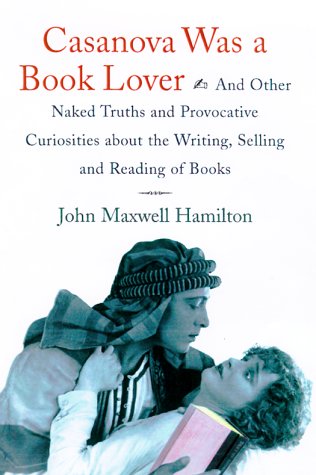
I've been reading John Maxwell Hamilton's Casanova was a Book Lover. It's a stitching together of all sorts of book related trivia. In his chapter on stolen books Hamilton says, Ask a librarian which books are most frequently stolen and you'll get this answer: "Shhhhhhh!"
"Everybody steals books," he says, and follows that up with anecdotes about Popes and professors, Academy Award nominees and tourists.
On the other hand, "In 1992, looters of a Sunset Boulevard strip mall had their way with Circuit City and Trak Auto. They did not touch Crown Books."
But do libraries keep records of which books are stolen? "In 1978, Princeton found that more than 4 percent of its library holdings were lost, along with about 10 percent of the books in the branch libraries. ... In the 1990s, the New York Public Library inventoried its 132-mile-long research collection, from which books cannot be checked out. About 1.5 percent of the books were missing. ... But who is to know for certain? ... It's not always easy to distinguish between what is overdue, what is lost in the system, or what is stolen."
He goes on, "By calling attention to book thefts, librarians can put the problem higher on professional crime-fighters' agendas. Unfortunately, news of active crime fighting suggests that books are being stolen, which is bad publicity. Taxpayers might become angry about the management of public libraries. ... For the same reason, libraries don't tell the public that each year they discard many books that are no longer in demand to make room for books people want," that is, "to steal."
This week a patron at the BPL's Claremont branch brought to the reference desk a medical diagnostician's guide and pointed to the pages he wanted to read, or rather, pointed to the place in the book from which the pages he wanted to read had been excised. The edition was eight years old so we ordered a newer one. But this patron was also looking for our Physician's Desk Reference, which is a guide to pharmaceuticals. I couldn't find it either. Has it been stolen?
I wonder if the Claremont branch, being a block away from a hospital, is more prone to losing this particular kind of book.
One of the daily tasks these days is hunting up books patrons have placed requests on. A library user can ask to have a book transported from any BPL branch to a more convenient BPL branch. We run about the stacks twice a day gathering these up. We tend to get between 20 and 30 requests each day. Most days we are unable to locate one or two of these. That seems like a lot. But I'm not going to say the missing books were all stolen. Many an item will turn up, often when another patron steps up to the desk to check it out.
Wednesday, October 04, 2006
new stuff
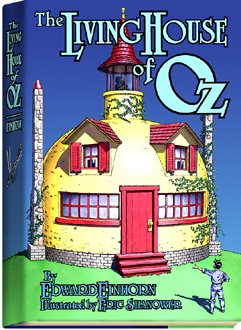
Yesterday the books I ordered from Hungry Tiger Press arrived:
The Living House of Oz by Edward Einhorn, illos by Eric Shanower
The Scarecrow and Tin-man of Oz, text & illos by W.W. Denslow (this volume collects stories the original illustrator of The Wizard of Oz created for newspaper funny pages after he broke with L. Frank Baum and the Broadway adaptation of Wizard was a big success.
Downtown today I picked up The Gay Metropolis, a history of gay New York of which I've heard good things. It was $1 on the clearance shelf.
And I bought Harvey Pekar stuff. The new issue of American Splendor and the new paperback of The Quitter.
Monday, September 25, 2006
Chattahoochee Review
The Winter-Spring 2006 issue of The Chattahoochee Review arrived today. I don't know why. I don't have anything in it. There's a letter included that asks for subscribers. I've written a poem on the back of it. Which I probably won't send to Chattahoochee Review. But who knows? Maybe I've sent them work in the past. I do like the word "Chattahoochee" and I went through a period I sent first to magazines with names I liked.
Only a few contributors look familiar. Leonard Susskind has an essay about not alienating Christians just because they're stupid (hey, he says, evolution has saddled scientists with human stupidity, too!) The poets Martha Zweig and Lola Haskins ... I know I've SEEN these names before. Not that I could characterize their work. "Her son vomits as he crawls / downstairs, and they know he may not / live this time, but they laugh because / he looks so comical -- fifteen and not / mastered walking yet." -- Haskins. Francisco Aragon. Which I recognize as I name I've confused with a Bay Area poet or two: Francisco Alarcon?
I'm often struck by how dull the opening line of a poem is. "I could fold laundry every day" ... "Who would have guessed, loves" ... "Down the street from my sister's house" ... "We were hauling boxes of supplies" ...
What makes these interesting as lines? A line, to justify its being singled out as a unit by the line break, ought to give the reader something more than if it were presented as prose.
The first I quote does give us a second line that offers up an excuse for the first's banality. "I could fold laundry every day / for a thousand years", it's a set up but the third line is the real punchline, "and never satisfy the women in my life." (Richard Peabody, "Folding Laundry in My Dreams")
Usually, though, the second line isn't much help. The second first-line quoted above turns out to be mid-sentence. The title begins the sentence: "The Muse // Who would have guessed, loves / To hear stories about Roberto ..." I suppose for those who've heard of him the third line offers up a punchline of sorts when it reveals it's Roberto Clemente that the Muse likes to hear about. Apparently he is somebody one might have heard of. The voice of the poem builds up to a casual slangy sauciness. Looking through the poem I can see lines that are interesting as lines. Seems like to me the poem could have been structured to put one up top. ("My Muse", Rick Campbell)
"Down the street from my sister's house / Where I am staying for the summer" ... If I resolved never to read past a dull first line then told myself, oh just this one time Glenn, and found myself stumbling across line number two here ... sheesh ... what can I say? ("Retards", George Bilgere)
"We were hauling boxes of supplies / from our boss's old office to Tifton, the dark" ... I don't know that it helps that Liz is being smothered by a "blanket of morning" ... ("Almost a Love Song Close to Tifton, GA", Liz Robbins)
Only a few contributors look familiar. Leonard Susskind has an essay about not alienating Christians just because they're stupid (hey, he says, evolution has saddled scientists with human stupidity, too!) The poets Martha Zweig and Lola Haskins ... I know I've SEEN these names before. Not that I could characterize their work. "Her son vomits as he crawls / downstairs, and they know he may not / live this time, but they laugh because / he looks so comical -- fifteen and not / mastered walking yet." -- Haskins. Francisco Aragon. Which I recognize as I name I've confused with a Bay Area poet or two: Francisco Alarcon?
I'm often struck by how dull the opening line of a poem is. "I could fold laundry every day" ... "Who would have guessed, loves" ... "Down the street from my sister's house" ... "We were hauling boxes of supplies" ...
What makes these interesting as lines? A line, to justify its being singled out as a unit by the line break, ought to give the reader something more than if it were presented as prose.
The first I quote does give us a second line that offers up an excuse for the first's banality. "I could fold laundry every day / for a thousand years", it's a set up but the third line is the real punchline, "and never satisfy the women in my life." (Richard Peabody, "Folding Laundry in My Dreams")
Usually, though, the second line isn't much help. The second first-line quoted above turns out to be mid-sentence. The title begins the sentence: "The Muse // Who would have guessed, loves / To hear stories about Roberto ..." I suppose for those who've heard of him the third line offers up a punchline of sorts when it reveals it's Roberto Clemente that the Muse likes to hear about. Apparently he is somebody one might have heard of. The voice of the poem builds up to a casual slangy sauciness. Looking through the poem I can see lines that are interesting as lines. Seems like to me the poem could have been structured to put one up top. ("My Muse", Rick Campbell)
"Down the street from my sister's house / Where I am staying for the summer" ... If I resolved never to read past a dull first line then told myself, oh just this one time Glenn, and found myself stumbling across line number two here ... sheesh ... what can I say? ("Retards", George Bilgere)
"We were hauling boxes of supplies / from our boss's old office to Tifton, the dark" ... I don't know that it helps that Liz is being smothered by a "blanket of morning" ... ("Almost a Love Song Close to Tifton, GA", Liz Robbins)
Monday, September 18, 2006
what I bought at the Petaluma Poetry Walk
 Geri Digiorno has been putting together the Petaluma Poetry Walk for the last ten years. I'd heard she had a new book from Red Hen Press. So I was hoping she would have copies for sale. It's nice looking, though I'm a bit puzzled by the book designer's choice to completely elide her face. I'm also a bit disappointed that so few of the poems are new to me. Oh well. Maybe I should think of White Lipstick as Geri's Collected Poems.
 I also bought the second issue of North Coast Review from its editor, Vince Storti. He said he had run out of the latest issue. The review is not filled with A-listers but I do recognize many names from the Bay scene, some of whom I quite like (some I don't): Lucille Lang Day, Jack Foley, Dale Jensen, Kit Kennedy, Ivan Arguelles, H.D. Moe.
Sunday, September 10, 2006
what I bought at the SF ZineFest

We're just back from SF where Kent & I dropped in on the ZineFest, organized by John Porcellino. He did the fest promo design. I've been buying his self-published mini-comics for 15 years. I've never written to him, though I toyed with inviting him out to lunch or something when I learned that he had moved to San Francisco. Turns out he & wife Misun will be moving back to Denver in a month. They came to town so she could study acupuncture.
ZineFest was like a mini-APE. Because I was buying from the creators I tried to be freer with my money. Yes, I can afford it these days, have to remind myself.
So let's unpack the bag:
Couch Tag, a mini-comic by Jesse Reklaw & Brandon MacInnis.
An Inside Job, a collection of dream comics by HOB/Eli Bishop.
Quagga #5 and Hut-Jack'd by Alixopulos.
Speak Now, or Forever: Friends #1 by Francois Vigneault. I own #2 & 3 so why not?
Not My Small Diary #11, a mini-comics anthology of autobiograhical shorts edited by Delaine Green.
Manic D Press had a table so I picked up the just published new book by Justin Chin, Gutted, and Beth Lisick's This too can be yours, two for the price of one!
Kent went for Mary Van Note's Bradley, a stick figure graphic novel. Its subtitle: "a story of seduction" ... "Bradley" in cross-stitch on a swatch of white material is stapled to the front cover.
Thursday, September 07, 2006
new

I picked up the new issue of American Splendor, surprised to see it published by Vertigo, DC Comics' non-superhero/mature readers line. They can't have looked at publishing Pekar as a chance to cash in. Inside there are two 2-pagers and two longer pieces. The longest piece chronicles a day in which Harvey is trying to get the New York Times to cough up the money for something he did for them while trying to get his 16 year old daughter to keep him apprised of her movements (she just disappears!) and coax in the housecat who escaped when daughter left the door open. An eventful day! Kent laughed at the inappropriateness of the cover ads for PlayStation games.
I bought Katharine Roger's biography of L. Frank Baum at Half Price. I saw it last time I was in and passed it up. I've read a library copy. But I decided I ought to have a good Baum bio and I did like reading it so I went ahead and bought it this time.
Yesterday I passed a box of books left at curbside and fished out You'll Never Eat Lunch in This Town Again, which is supposed to be a hilarious indictment of Hollywood. 600 pages?
Wednesday, August 23, 2006
two lit mags
I walked up the hill to Euclid for lunch today, had a chef salad at Stuffed Inn then browsed Analog Books. I haven't been buying literary magazines in a long time. Part of it was I would bring them home and they'd sit around unread. Part of it was I didn't want to buy magazines if they weren't going to publish my stuff. 'S the truth.
Anyway, I've been wanting to add some current literary magazines to my browsing paperbacks collection at Claremont plus I've actually been reading magazines again, working through my New Yorker subscription, Parthenon West Review, Beeswax Magazine, Matter. So at Analog I picked up the Spring/Summer 2006 issue (#58) of West Branch and the Summer 2006 issue (#2) of A Public Space.
I started reading West Branch over coffee & a cookie at the cafe across the street from the bookstore. I got through the first five poems. Four by Mike White (editor of Quarterly West, says the bio) and one by Aleda Shirley. Were I editor I would not have published any of them. What, they're Awful? No. But I know the magazine received better poems and chose not to publish them. Death shows up in one of White's wearing a "rumpled smock" and displaying "empty hands", prepping to work once more on the Sistine Chapel of White's inner skull; "Nocturne in Black Monochrome" the title of the painting. I can't think of anything to say about the poem other than Death could be doing better things with his/her time. Aleda Shirley seems to like pairing words, "solid & consecutive", "refractory & lissome", "fulgent & resolute" ... seems she's thinking about a "friend who died suddenly at forty" (ooh, my age) and how this friend's "refractory & lissome residue" has to compete with "planes / pulling banners advertising happy hours & water parks, / with satellites & space debris & ovals of ozone" on its way to heaven. I misread "ozone" as "ovaltine" ... "ovals of ovaltine" ... There's an edit for you! This is one of those poems I'm tempted to rewrite ... "planes drag the sad names of bars through the muck of a sky indifferent even to a boot" ... whew, my god, "refractory & lissome" cramp up like words-of-the-day getting their first exercise after lying abed for months in a convalescent hospital.
Anyway, I've been wanting to add some current literary magazines to my browsing paperbacks collection at Claremont plus I've actually been reading magazines again, working through my New Yorker subscription, Parthenon West Review, Beeswax Magazine, Matter. So at Analog I picked up the Spring/Summer 2006 issue (#58) of West Branch and the Summer 2006 issue (#2) of A Public Space.
I started reading West Branch over coffee & a cookie at the cafe across the street from the bookstore. I got through the first five poems. Four by Mike White (editor of Quarterly West, says the bio) and one by Aleda Shirley. Were I editor I would not have published any of them. What, they're Awful? No. But I know the magazine received better poems and chose not to publish them. Death shows up in one of White's wearing a "rumpled smock" and displaying "empty hands", prepping to work once more on the Sistine Chapel of White's inner skull; "Nocturne in Black Monochrome" the title of the painting. I can't think of anything to say about the poem other than Death could be doing better things with his/her time. Aleda Shirley seems to like pairing words, "solid & consecutive", "refractory & lissome", "fulgent & resolute" ... seems she's thinking about a "friend who died suddenly at forty" (ooh, my age) and how this friend's "refractory & lissome residue" has to compete with "planes / pulling banners advertising happy hours & water parks, / with satellites & space debris & ovals of ozone" on its way to heaven. I misread "ozone" as "ovaltine" ... "ovals of ovaltine" ... There's an edit for you! This is one of those poems I'm tempted to rewrite ... "planes drag the sad names of bars through the muck of a sky indifferent even to a boot" ... whew, my god, "refractory & lissome" cramp up like words-of-the-day getting their first exercise after lying abed for months in a convalescent hospital.
Thursday, August 10, 2006
Berkeley Review of Latin American Studies
So what did I learn from the Winter/Spring 2006 issue of the Berkeley Review of Latin American Studies?
Michelle Bachelet, the new president of Chile, is a pediatrician. "Together with her mother, she was arrested and tortured in 1975 at the Villa Grimaldi, one of Chile's most notorious torture centers." Her father had already died in prison. He was an air force general under deposed president Allende. "Due to her family's personal ties with the military, Bachelet and her mother were released later that year, after which they were smuggled out of the country." Her cabinet is 50/50 male/female.
"[I]f her administration is mediocre or worse, she ... may ... damage the principle of gender equality." Unlike all the all-male administrations which, when completely idiotic and incompetent, cruel and assaultive, do nothing to "damage the principle" of male superiority.
An article about the inequities of a guest worker program for Mexicans in the United States ... An article about criminal violence in Brazil ... It sucks to live in Colombia during its neverending civil war ... and it's tough to find a market for a movie not made in Hollywood (in this case a Chilean movie) ... mm hm, nothing new here.
An interesting article about Mexico's "generics revolution". It seems a businessman has decided to open cutrate clinics and pharmacies. The pharmacies specialize in generic drugs. "Refusing ... to sell Laboratorios Best products to the public sector [that is, the Mexican government?], Gonzalez Torres dramatically offered to sell at a further 25 percent discount any medicine that patients were prescribed by IMSS [Instituto Mexicano de Seguro Social, which would translate to Mexican Social Security Institute, I believe] but could not get their hands on in the still understocked public sector pharmacies." Understocked because his company refused to sell to them or because they are inefficient government entities or ..? Gonzalez Torres declares, "'I'm Che Guevara in a Mercedes!'" The article terms it "a businessman's revolution" and "populist consumerism." I'm not quite sure what to make of it but it doesn't sound bad.
Michelle Bachelet, the new president of Chile, is a pediatrician. "Together with her mother, she was arrested and tortured in 1975 at the Villa Grimaldi, one of Chile's most notorious torture centers." Her father had already died in prison. He was an air force general under deposed president Allende. "Due to her family's personal ties with the military, Bachelet and her mother were released later that year, after which they were smuggled out of the country." Her cabinet is 50/50 male/female.
"[I]f her administration is mediocre or worse, she ... may ... damage the principle of gender equality." Unlike all the all-male administrations which, when completely idiotic and incompetent, cruel and assaultive, do nothing to "damage the principle" of male superiority.
An article about the inequities of a guest worker program for Mexicans in the United States ... An article about criminal violence in Brazil ... It sucks to live in Colombia during its neverending civil war ... and it's tough to find a market for a movie not made in Hollywood (in this case a Chilean movie) ... mm hm, nothing new here.
An interesting article about Mexico's "generics revolution". It seems a businessman has decided to open cutrate clinics and pharmacies. The pharmacies specialize in generic drugs. "Refusing ... to sell Laboratorios Best products to the public sector [that is, the Mexican government?], Gonzalez Torres dramatically offered to sell at a further 25 percent discount any medicine that patients were prescribed by IMSS [Instituto Mexicano de Seguro Social, which would translate to Mexican Social Security Institute, I believe] but could not get their hands on in the still understocked public sector pharmacies." Understocked because his company refused to sell to them or because they are inefficient government entities or ..? Gonzalez Torres declares, "'I'm Che Guevara in a Mercedes!'" The article terms it "a businessman's revolution" and "populist consumerism." I'm not quite sure what to make of it but it doesn't sound bad.
Monday, August 07, 2006
pile of reading
the Winter/Spring 2006 issue of Berkeley Review of Latin American Studies (in which I learn that Chile has elected its first woman president. Kent told me this some time ago and I remember thinking, Oh? I ought to find out more about that.)
Spontaneous Combustion, a thinly fictionalized autobiographical novel by David B. Feinberg (the incidents in at least the first third recapitulate incidents in Feinberg's first novel, Eighty-Sixed)
924 Gilman, edited by Brian Edge (a sort of oral history of Berkeley's famed collectively run punk rock club; the book's repetitive and rarely exposes a prose style but I'm enjoying it)
In Cold Blood, a nonfiction novel by Truman Capote (I've been meaning to read this forever and it's a little premature to say I'm reading it since so far I've only read the first sentence about five times; while it was lying on the couch Kent took it up and got to the fourth page)
Parthenon West Review, issue 3, a poetry magazine out of San Francisco
Swann's Way, the endless novel (with endless sentences) by Marcel Proust
The Work of a Common Woman, poems by Judy Grahn (Grahn agreed to read as part of the Poetry & Pizza series this fall -- yay!)
Long Walk to Freedom, the autobiography of Nelson Mandela
Funny in Farsi: a memoir of growing up Iranian in America, by Firoozeh Dumas (the "Berkeley Reads" book this year; I tried to read along with the community book the first year they announced one but stalled out on Ellison's Invisible Man midway through the first chapter)
Snow Crash, a virtual reality novel by Neal Stephenson (as with In Cold Blood it is premature to say I'm reading this, really, but Stephenson keeps getting the hype and, um, I see by looking at page 211 that there's a librarian in it)
Poems for the Millennium, Volume Two, edited by Jerome Rothenberg & Pierre Joris (if this had been a 430 page anthology I would have finished it already)
Snapshots: 20th Century Mother-Daughter Fiction, edited by Joyce Carol Oates & Janet Berliner (I've read two of the stories; maybe now that I'm between New Yorkers I will read a third)
The Collected Poems by Sylvia Plath (I read the bio Bitter Fame but I find I keep pulling Plath biographies down from the bookstore shelf and flipping through them for fresh anecdotes; "It took three days driving north to find a cloud / The polite skies over Boston couldn't possibly accomodate.")
For those of you not up to looking, the books that have hung on since last pile are: Plath's Collected, Snapshots, Parthenon West, 924 Gilman, Poems for the Millennium, Long Walk to Freedom, and Swann's Way.
Other books have fallen into and out of the pile in the meantime but I'm not going to go tote those up.
Spontaneous Combustion, a thinly fictionalized autobiographical novel by David B. Feinberg (the incidents in at least the first third recapitulate incidents in Feinberg's first novel, Eighty-Sixed)
924 Gilman, edited by Brian Edge (a sort of oral history of Berkeley's famed collectively run punk rock club; the book's repetitive and rarely exposes a prose style but I'm enjoying it)
In Cold Blood, a nonfiction novel by Truman Capote (I've been meaning to read this forever and it's a little premature to say I'm reading it since so far I've only read the first sentence about five times; while it was lying on the couch Kent took it up and got to the fourth page)
Parthenon West Review, issue 3, a poetry magazine out of San Francisco
Swann's Way, the endless novel (with endless sentences) by Marcel Proust
The Work of a Common Woman, poems by Judy Grahn (Grahn agreed to read as part of the Poetry & Pizza series this fall -- yay!)
Long Walk to Freedom, the autobiography of Nelson Mandela
Funny in Farsi: a memoir of growing up Iranian in America, by Firoozeh Dumas (the "Berkeley Reads" book this year; I tried to read along with the community book the first year they announced one but stalled out on Ellison's Invisible Man midway through the first chapter)
Snow Crash, a virtual reality novel by Neal Stephenson (as with In Cold Blood it is premature to say I'm reading this, really, but Stephenson keeps getting the hype and, um, I see by looking at page 211 that there's a librarian in it)
Poems for the Millennium, Volume Two, edited by Jerome Rothenberg & Pierre Joris (if this had been a 430 page anthology I would have finished it already)
Snapshots: 20th Century Mother-Daughter Fiction, edited by Joyce Carol Oates & Janet Berliner (I've read two of the stories; maybe now that I'm between New Yorkers I will read a third)
The Collected Poems by Sylvia Plath (I read the bio Bitter Fame but I find I keep pulling Plath biographies down from the bookstore shelf and flipping through them for fresh anecdotes; "It took three days driving north to find a cloud / The polite skies over Boston couldn't possibly accomodate.")
For those of you not up to looking, the books that have hung on since last pile are: Plath's Collected, Snapshots, Parthenon West, 924 Gilman, Poems for the Millennium, Long Walk to Freedom, and Swann's Way.
Other books have fallen into and out of the pile in the meantime but I'm not going to go tote those up.
Sunday, August 06, 2006
Eyak
Useless to go back there.
My uncles too have all died out on me.
After my uncles all died out my aunts next fell,
to die.
Yes,
why is it I alone,
just I alone have managed to survive?
I survive.
The above is a translation of a "lament" recorded in 1972. The poem/song was composed in Eyak, an Alaskan native (Indian) language that, as of summer last year had one remaining native speaker. Having no one to talk to in her language the elderly woman typically uses English and Tlingit, a native language that, the author of the article I'm looking at (New Yorker, June 6, 2005) speculates, may in the absence of English have displaced Eeyak. When Europeans arrived Eyak speakers were a remnant population and Tlingit speakers were becoming ever more dominant in the area.
The extinction of languages distresses me. I do remember when I was a kid being delighted by the idea of global language and enough of a chauvinist (& lazy?) to hope that that hegemonic language be English. As I studied other languages (such common ones as Spanish & Portuguese and the relatively exotic American Sign Language) and discovered different ways of organizing thoughts my dream of the triumph of English began to seem distasteful. Gradually the frustration with hearing unintelligible language gave way to an appreciation for their musicks. The change had something to do with my growing appreciation for poetry and exploration in language. Much poetry is difficult, even impenetrable, and, I discovered, there are varieties even of English that I just can't grok. Unfamiliar languages came to seem new technologies, fresh tools, and I like gizmos, too. I like it when science "discovers" some animal (typically well known to the also overlooked locals). Why shouldn't I be fascinated by the novelties of other languages?
The Eeyak version of the first two lines of the above goes (roughly, as I don't know how to reproduce some of the typography -- an "l" with a line through it, an "x" with a subscript period):
K'aadih ulah uuch' q'e' iili'ee.
SitinhGayuudik sixa' iinsdi'ahl.
My uncles too have all died out on me.
After my uncles all died out my aunts next fell,
to die.
Yes,
why is it I alone,
just I alone have managed to survive?
I survive.
The above is a translation of a "lament" recorded in 1972. The poem/song was composed in Eyak, an Alaskan native (Indian) language that, as of summer last year had one remaining native speaker. Having no one to talk to in her language the elderly woman typically uses English and Tlingit, a native language that, the author of the article I'm looking at (New Yorker, June 6, 2005) speculates, may in the absence of English have displaced Eeyak. When Europeans arrived Eyak speakers were a remnant population and Tlingit speakers were becoming ever more dominant in the area.
The extinction of languages distresses me. I do remember when I was a kid being delighted by the idea of global language and enough of a chauvinist (& lazy?) to hope that that hegemonic language be English. As I studied other languages (such common ones as Spanish & Portuguese and the relatively exotic American Sign Language) and discovered different ways of organizing thoughts my dream of the triumph of English began to seem distasteful. Gradually the frustration with hearing unintelligible language gave way to an appreciation for their musicks. The change had something to do with my growing appreciation for poetry and exploration in language. Much poetry is difficult, even impenetrable, and, I discovered, there are varieties even of English that I just can't grok. Unfamiliar languages came to seem new technologies, fresh tools, and I like gizmos, too. I like it when science "discovers" some animal (typically well known to the also overlooked locals). Why shouldn't I be fascinated by the novelties of other languages?
The Eeyak version of the first two lines of the above goes (roughly, as I don't know how to reproduce some of the typography -- an "l" with a line through it, an "x" with a subscript period):
K'aadih ulah uuch' q'e' iili'ee.
SitinhGayuudik sixa' iinsdi'ahl.
Monday, July 17, 2006
The New Yorker short story
So I've been reading my subscription to The New Yorker, right?, now that it's been lapsed for a year or more. Just finished the third of the stories in last June's "Debut Fiction" issue.
There's a photo of the three debutantes, "Uwen Akpan, 34; Karen Russell, 23; and Justin Tussing, 34" posed in what looks like the storage room of "the Strand Book Store." Uwen is black, perhaps an African immigrant -- one might guess that from his story, which is set in Nairobi, Kenya. Karen is a bright-eyed mousy blond, her long pale arms bare. Justin has rectangular glasses, a shadow on his jaw.
None gives a story to which I wish to return. Not saying they're bad. They all do that New Yorker short story thing where the story doesn't resolve so much as it stops. I'm getting used to it, sort of. A situation is presented, characters drawn, conflicts grow and begin to make things difficult, then a complication arises. As the characters realize they are facing a new situation, the story stops and the new situation is not quite addressed.
In Uwen's story the oldest boy in a street family is the hope of the family. They're putting aside money so he can go to school. Even his eldest sister who is hooking saves money for his sake. The boy is conflicted, ashamed to be so favored when all the others (especially the elder sister whom he looks up to) are obviously stuck, no school, few prospects. Sister is planning to move out (the family lives in a storage box); when she comes to get her things, the boy runs away. End of story.
In Karen's story two brothers (one of whom narrates) are searching for their little sister's body. She was swept out to sea and the brothers blame themselves. There's a mysterious element in that the older boy finds a pair of water goggles that supposedly reveal ghosts. Will they see their sister's ghost? No. Unless that glow that suffuses the grotto is her ... I guess this story comes closest to resolution. But Karen's young. I'm sure she'll wise up.
Justin's story has a teen boy developing a crush on his pretty young teacher. There's a crazy wise hobo who speaks like an oracle, penetrating yet inexplicable. There's a family that's just a touch quirky. Just when it looks like the (secret) relationship with teacher might develop into something deeper (or she might dump him) she tells him her ex-husband has called and is threatening to come to town. "'I'll protect you from him,'" he says. "That's the type of life I wanted to lead when I was seventeen." Boy and teacher hold hands. End of story.
It's easy to imagine each as a novel excerpt. That they end where they end doesn't seem at all inevitable. The stories don't wrap up. In fact with many NYer short stories I have the feeling more is about to happen than we've so far been allowed to see. Having invested in the characters, having taken the time to get to know the situation they're in, I confess to feeling a little frustration at this abrupt manner of closing up shop. Well ... what happened then? How'd it turn out?
Endings are artificial, I suppose. But then so is a story. In a sense I've come to like that little feeling of frustration. I would prefer resolution. But it's kind of like leaving the table hungry, you know. You want more. You think more, maybe. And, playing that metaphor out, you end up snacking.
There's a photo of the three debutantes, "Uwen Akpan, 34; Karen Russell, 23; and Justin Tussing, 34" posed in what looks like the storage room of "the Strand Book Store." Uwen is black, perhaps an African immigrant -- one might guess that from his story, which is set in Nairobi, Kenya. Karen is a bright-eyed mousy blond, her long pale arms bare. Justin has rectangular glasses, a shadow on his jaw.
None gives a story to which I wish to return. Not saying they're bad. They all do that New Yorker short story thing where the story doesn't resolve so much as it stops. I'm getting used to it, sort of. A situation is presented, characters drawn, conflicts grow and begin to make things difficult, then a complication arises. As the characters realize they are facing a new situation, the story stops and the new situation is not quite addressed.
In Uwen's story the oldest boy in a street family is the hope of the family. They're putting aside money so he can go to school. Even his eldest sister who is hooking saves money for his sake. The boy is conflicted, ashamed to be so favored when all the others (especially the elder sister whom he looks up to) are obviously stuck, no school, few prospects. Sister is planning to move out (the family lives in a storage box); when she comes to get her things, the boy runs away. End of story.
In Karen's story two brothers (one of whom narrates) are searching for their little sister's body. She was swept out to sea and the brothers blame themselves. There's a mysterious element in that the older boy finds a pair of water goggles that supposedly reveal ghosts. Will they see their sister's ghost? No. Unless that glow that suffuses the grotto is her ... I guess this story comes closest to resolution. But Karen's young. I'm sure she'll wise up.
Justin's story has a teen boy developing a crush on his pretty young teacher. There's a crazy wise hobo who speaks like an oracle, penetrating yet inexplicable. There's a family that's just a touch quirky. Just when it looks like the (secret) relationship with teacher might develop into something deeper (or she might dump him) she tells him her ex-husband has called and is threatening to come to town. "'I'll protect you from him,'" he says. "That's the type of life I wanted to lead when I was seventeen." Boy and teacher hold hands. End of story.
It's easy to imagine each as a novel excerpt. That they end where they end doesn't seem at all inevitable. The stories don't wrap up. In fact with many NYer short stories I have the feeling more is about to happen than we've so far been allowed to see. Having invested in the characters, having taken the time to get to know the situation they're in, I confess to feeling a little frustration at this abrupt manner of closing up shop. Well ... what happened then? How'd it turn out?
Endings are artificial, I suppose. But then so is a story. In a sense I've come to like that little feeling of frustration. I would prefer resolution. But it's kind of like leaving the table hungry, you know. You want more. You think more, maybe. And, playing that metaphor out, you end up snacking.
Monday, July 10, 2006
books bought
I walked downtown about noon to go to the gym. I was feeling kinda blue but physically felt pretty good. When I have a day without obligations and I’m not sore & worn out I get to the gym. That’s about once a week. I did the FitLinxx routine on the weight machine – I punch in my code and the computer tells me when last I lifted weights then at each station tells me how much weight I lifted that last time and how many reps. It’s nice not to have to remember.
I ate lunch afterward at Panini -- an artichoke hearts sandwich, a cup of coffee, and one of their rich chocolate cookies. I wrote in my diary and read a couple pages of The Ohlone Way, a book about the lifeways of the people who lived in the SF Bay Area before the arrival of Europeans.
I haven’t been to Comic Relief in two or three weeks so I figured I’d poke around there on the way home. First I stopped at Half Price Books. I checked out the clearance shelves and there were a lot of mildly interesting books filling the clearance shelves. A worker was boxing up books that had sat too long and refilling the space with new clearances. I drifted by the children’s section and there was a new Oz thingie, something called, I think, Everything Oz, which quotes from various Oz books and Oz-related sources and features illustrations & doodads from around the world. I slid it back onto the shelf. Since I read Born Free last year and since I own the third book Joy Adamson wrote about Elsa the lioness, Forever Free, I’ve had my eye out for Living Free, in which Elsa gives birth to and raises a litter of cubs. A handsome hardcover was waiting for me today. I flipped through it. I’d been hoping for a cheap paperback but just yesterday I’d been wondering if I ought to fill out a want slip at one of the town’s used bookstores. What, I’d asked myself, was I willing to pay? Ten bucks? This copy was $5.98. I tucked it under my arm and made a final swing by the graphic novels and DVDs.
At Comic Relief I let myself be seduced by De: Tales, a collection of “stories from urban Brazil” by Fabio Moon and Gabriel Ba. The artists are twins. Long heads and bodies and big facial features. The drawings match. And I like the way the perspectives are often looking down from above or up from below. I recently read an anthology called Autobiographix that included one of their stories (the story also appears here). I also bought Alixopulos’ Mine Tonight. Alixopulos is a local and I first became aquainted with his work via a self-published mini-comic I picked up at Comic Relief. His art is scratchy and hungover-looking.
A block later I did a doubletake at the stationery store which is closing. Big signs announced, “50% off marked price.” One can always use office supplies, right? Cheap blank books are good, too. And I found a cheap blank book with an “ostrich print” cover. Plucked ostrich skin? I also bought a spiral notebook for my book log and a USB cable. I saw Joyce Jenkins, who had some new pens in hand. She says she’s putting the finishing touches on a new print issue of Poetry Flash. “There’s always something more to do,” she said. I told her I was working on the Poetry & Pizza calendar for the fall. She said she would try to make it to a reading.
For the last paragraph Sutra has been in my lap. He seems to be tolerating my typing. But he pokes my arm with his nose; why aren’t I rubbing him up?
I ate lunch afterward at Panini -- an artichoke hearts sandwich, a cup of coffee, and one of their rich chocolate cookies. I wrote in my diary and read a couple pages of The Ohlone Way, a book about the lifeways of the people who lived in the SF Bay Area before the arrival of Europeans.
I haven’t been to Comic Relief in two or three weeks so I figured I’d poke around there on the way home. First I stopped at Half Price Books. I checked out the clearance shelves and there were a lot of mildly interesting books filling the clearance shelves. A worker was boxing up books that had sat too long and refilling the space with new clearances. I drifted by the children’s section and there was a new Oz thingie, something called, I think, Everything Oz, which quotes from various Oz books and Oz-related sources and features illustrations & doodads from around the world. I slid it back onto the shelf. Since I read Born Free last year and since I own the third book Joy Adamson wrote about Elsa the lioness, Forever Free, I’ve had my eye out for Living Free, in which Elsa gives birth to and raises a litter of cubs. A handsome hardcover was waiting for me today. I flipped through it. I’d been hoping for a cheap paperback but just yesterday I’d been wondering if I ought to fill out a want slip at one of the town’s used bookstores. What, I’d asked myself, was I willing to pay? Ten bucks? This copy was $5.98. I tucked it under my arm and made a final swing by the graphic novels and DVDs.
At Comic Relief I let myself be seduced by De: Tales, a collection of “stories from urban Brazil” by Fabio Moon and Gabriel Ba. The artists are twins. Long heads and bodies and big facial features. The drawings match. And I like the way the perspectives are often looking down from above or up from below. I recently read an anthology called Autobiographix that included one of their stories (the story also appears here). I also bought Alixopulos’ Mine Tonight. Alixopulos is a local and I first became aquainted with his work via a self-published mini-comic I picked up at Comic Relief. His art is scratchy and hungover-looking.
A block later I did a doubletake at the stationery store which is closing. Big signs announced, “50% off marked price.” One can always use office supplies, right? Cheap blank books are good, too. And I found a cheap blank book with an “ostrich print” cover. Plucked ostrich skin? I also bought a spiral notebook for my book log and a USB cable. I saw Joyce Jenkins, who had some new pens in hand. She says she’s putting the finishing touches on a new print issue of Poetry Flash. “There’s always something more to do,” she said. I told her I was working on the Poetry & Pizza calendar for the fall. She said she would try to make it to a reading.
For the last paragraph Sutra has been in my lap. He seems to be tolerating my typing. But he pokes my arm with his nose; why aren’t I rubbing him up?
Tuesday, July 04, 2006
thoughts on reading
Used to be I would only read one book at a time. It was a resolution. I couldn’t plunge into a new book until I finished the one I was reading. So what changed? What made me switch from a single book to a mini-library?
What made me think I could only read one book at a time? Maybe I thought I wouldn’t be able to keep different books separate in my thoughts? I still try to avoid reading more than one novel at a time. Not that I’m fastidious about it. I was just reading Steinbeck’s Pastures of Heaven and that’s certainly different enough from Proust’s Swann’s Way that there’s little likelihood of the two getting mixed up in my head.
One difficulty came with long books. I’m not a fast reader. Was I to stack up comic books while I forced myself to attend only to Tom Jones? Did I really restrict myself to the deathbed edition of Whitman’s Leaves of Grass until at last I closed the cover on the final page?
Poetry was a big reason I threw aside the notion I could keep myself to a single book. I decided forcing myself to read poem after poem after poem without a break was doing nothing for my appreciation of poetry. Especially when it was difficult or I wasn’t sure I liked it or I plain didn’t like it but felt I ought to keep reading so I could learn something about what not liking meant.
Comics were, too. Many a comic story is played out over several issues. And nobody’s expected to save up all the parts to read at one sitting. If you buy more than one series you’re immersed in more than one ongoing story. It’s not hard to pick back up where the story left off a month previous.
By the time I was going to college, of course, there was no way I would be able to restrict myself to a single book – each class had its own list of books to hurry through. And there were plenty of things I wanted to read that had nothing to do with my classes. I remember thinking I would limit myself to five books – one book of poetry, one book of nonfiction, one novel, one book of short stories, one graphic novel. Something like that.
A book will come along and take over and I’ll just read that until I’ve finished. Then there will be the evenings I read a page or two from each of eight volumes. Books – particularly anthologies of poetry, short stories or whatever – will be pursued regularly then forgotten for a month or so. There are probably a few books I’ve started and never will finish. But I like to get all the way through a book. I finger the pages, look at the thickness of what’s been read, what waits, ponder what needs resolving in the story or whether I’ll enjoy more of the poems to come than I’ve enjoyed what’s passed.
What made me think I could only read one book at a time? Maybe I thought I wouldn’t be able to keep different books separate in my thoughts? I still try to avoid reading more than one novel at a time. Not that I’m fastidious about it. I was just reading Steinbeck’s Pastures of Heaven and that’s certainly different enough from Proust’s Swann’s Way that there’s little likelihood of the two getting mixed up in my head.
One difficulty came with long books. I’m not a fast reader. Was I to stack up comic books while I forced myself to attend only to Tom Jones? Did I really restrict myself to the deathbed edition of Whitman’s Leaves of Grass until at last I closed the cover on the final page?
Poetry was a big reason I threw aside the notion I could keep myself to a single book. I decided forcing myself to read poem after poem after poem without a break was doing nothing for my appreciation of poetry. Especially when it was difficult or I wasn’t sure I liked it or I plain didn’t like it but felt I ought to keep reading so I could learn something about what not liking meant.
Comics were, too. Many a comic story is played out over several issues. And nobody’s expected to save up all the parts to read at one sitting. If you buy more than one series you’re immersed in more than one ongoing story. It’s not hard to pick back up where the story left off a month previous.
By the time I was going to college, of course, there was no way I would be able to restrict myself to a single book – each class had its own list of books to hurry through. And there were plenty of things I wanted to read that had nothing to do with my classes. I remember thinking I would limit myself to five books – one book of poetry, one book of nonfiction, one novel, one book of short stories, one graphic novel. Something like that.
A book will come along and take over and I’ll just read that until I’ve finished. Then there will be the evenings I read a page or two from each of eight volumes. Books – particularly anthologies of poetry, short stories or whatever – will be pursued regularly then forgotten for a month or so. There are probably a few books I’ve started and never will finish. But I like to get all the way through a book. I finger the pages, look at the thickness of what’s been read, what waits, ponder what needs resolving in the story or whether I’ll enjoy more of the poems to come than I’ve enjoyed what’s passed.
Monday, July 03, 2006
pile of reading
Tropical Truth: a story of music & revolution in Brazil, by Caetano Veloso
Eyes of Desire: a Deaf Gay & Lesbian Reader, edited by Raymond Luczak
Long Walk to Freedom, the autobiography of Nelson Mandela
The Pastures of Heaven, by John Steinbeck
X-Men, vol 3: nos 22-31, by Roy Thomas & Werner Roth
The New Yorker, the Debut Fiction issue from June ’05
Swann’s Way, by Marcel Proust, C.K. Scott Moncrieff translation
Poems for the Millennium, vol 2: From Postwar to Millennium, edited by Jerome Rothenberg and Pierre Joris
The Collected Poems, Sylvia Plath
924 Gilman, compiled by Brian Edge
Kona Village Resort: a Village is a Family, an historical account published by the resort, although no author is credited, “We would like to acknowledge Lani, our Kona Village historian, who worked so tirelessly on this book …”
Liaison, by Joyce Wadler
Parthenon West Review, issue 3, Fall 2003
Snapshots: 20th Century Mother-Daughter Fiction, edited by Joyce Carol Oates & Janet Berliner
The Company of Animals: a naturalist’s adventures in the jungle of Malaya, by Ronald McKie
Eyes of Desire: a Deaf Gay & Lesbian Reader, edited by Raymond Luczak
Long Walk to Freedom, the autobiography of Nelson Mandela
The Pastures of Heaven, by John Steinbeck
X-Men, vol 3: nos 22-31, by Roy Thomas & Werner Roth
The New Yorker, the Debut Fiction issue from June ’05
Swann’s Way, by Marcel Proust, C.K. Scott Moncrieff translation
Poems for the Millennium, vol 2: From Postwar to Millennium, edited by Jerome Rothenberg and Pierre Joris
The Collected Poems, Sylvia Plath
924 Gilman, compiled by Brian Edge
Kona Village Resort: a Village is a Family, an historical account published by the resort, although no author is credited, “We would like to acknowledge Lani, our Kona Village historian, who worked so tirelessly on this book …”
Liaison, by Joyce Wadler
Parthenon West Review, issue 3, Fall 2003
Snapshots: 20th Century Mother-Daughter Fiction, edited by Joyce Carol Oates & Janet Berliner
The Company of Animals: a naturalist’s adventures in the jungle of Malaya, by Ronald McKie
Saturday, July 01, 2006
D. Jayne McPherson
Material Lost
I forfeited my first and only LTD
to the junkyard in East Palo Alto
my first love to his mother's wishes
I was robbed of my silver coins by
a landlord's son; my federal paycheck
in the mail; of two borrowed IBMs and
one down mummybag by Marilyn in Mendocino
Things disappeared right in front of me
the cross-country snow trail during sunset
those nature lithographs stored at Mother's
my wallet in a phone booth near Boston
that 16th birthday, blue sapphire ring
As punishment, others drifted away
my best friendships Peggy and Sue
from my living out of state; walk-to-school
mate, Terry, from her husband's gunshot
wound; puppy Heidi in old age
But once I lost my voice, my name, my home
Perhaps I must face it: this body
too, slowly dissolves. But who would
be left to count it up
as only recombinant material lost?
-- D. Jayne McPherson
... Got a call from Jayne today. Sorta outta the blue. But it was nice reconnecting. Made me ponder what of hers I might have in the house. My eyes lit on an issue of The Tomcat, a poetry zine. It was sticking out of a box of papers I need to file. There were, what, five or six issues of The Tomcat. It declares itself, "a literary showcase for Northern California poets." I knew many of the poets editor Richard Benbrook published (& I knew Richard). I like Jayne's poem better than the poem of mine that appears in the same issue. My poem was from a series of poems in which a character named Bert used the telephone in various (metaphorical?) ways. I remember writing several Bert poems, writing them quickly so I would have more poems to mail out to magazines. I thought they were as good as/better than many of the poems I was seeing in the lit mags. Someday I'll revisit them. The one in Tomcat isn't bad. But I would have to fiddle with it some before republishing.
I like the catalog of things in "Material Lost" ... I don't like the word "recombinant" ... I remember not knowing what an "LTD" was ...
There are poets I didn't know back in 1990 (when this Tomcat was published) that are now familiar to me. Dorothy Jesse Beagle runs a poetry reading series at a cafe in Berkeley. John Selawsky ... is he the Berkeley School Board member and Green Pary activist? Jaimes Alsop started the webzine, The Alsop Review. Gary Mex Glazner ... same poet who first hosted poetry slams in this area?
There are poets who have since have died: Judy Stedman, Paul Mariah, William Talcott ... I knew the first two and met the third more than once.
I forfeited my first and only LTD
to the junkyard in East Palo Alto
my first love to his mother's wishes
I was robbed of my silver coins by
a landlord's son; my federal paycheck
in the mail; of two borrowed IBMs and
one down mummybag by Marilyn in Mendocino
Things disappeared right in front of me
the cross-country snow trail during sunset
those nature lithographs stored at Mother's
my wallet in a phone booth near Boston
that 16th birthday, blue sapphire ring
As punishment, others drifted away
my best friendships Peggy and Sue
from my living out of state; walk-to-school
mate, Terry, from her husband's gunshot
wound; puppy Heidi in old age
But once I lost my voice, my name, my home
Perhaps I must face it: this body
too, slowly dissolves. But who would
be left to count it up
as only recombinant material lost?
-- D. Jayne McPherson
... Got a call from Jayne today. Sorta outta the blue. But it was nice reconnecting. Made me ponder what of hers I might have in the house. My eyes lit on an issue of The Tomcat, a poetry zine. It was sticking out of a box of papers I need to file. There were, what, five or six issues of The Tomcat. It declares itself, "a literary showcase for Northern California poets." I knew many of the poets editor Richard Benbrook published (& I knew Richard). I like Jayne's poem better than the poem of mine that appears in the same issue. My poem was from a series of poems in which a character named Bert used the telephone in various (metaphorical?) ways. I remember writing several Bert poems, writing them quickly so I would have more poems to mail out to magazines. I thought they were as good as/better than many of the poems I was seeing in the lit mags. Someday I'll revisit them. The one in Tomcat isn't bad. But I would have to fiddle with it some before republishing.
I like the catalog of things in "Material Lost" ... I don't like the word "recombinant" ... I remember not knowing what an "LTD" was ...

There are poets I didn't know back in 1990 (when this Tomcat was published) that are now familiar to me. Dorothy Jesse Beagle runs a poetry reading series at a cafe in Berkeley. John Selawsky ... is he the Berkeley School Board member and Green Pary activist? Jaimes Alsop started the webzine, The Alsop Review. Gary Mex Glazner ... same poet who first hosted poetry slams in this area?
There are poets who have since have died: Judy Stedman, Paul Mariah, William Talcott ... I knew the first two and met the third more than once.
Wednesday, June 28, 2006
Victorian prudery
My sister Bernice was in town last week. We had opportunity for long talks and one of the things that came up was whether the Victorians were really so repressed as we've long been told.
There's a post up at Grumpy Old Bookman on the topic. Among other things GOB says, "In 1857, the medical journal The Lancet estimated that the capital could offer over 6,000 brothels and about 80,000 prostitutes: one woman in every sixteen -- of all ages -- was a whore."
So what makes us think they were prudes? The two men most known for the morals crusade, GOB says, were also "proprietors of the two most successful commercial lending libraries; and the libraries were huge buyers of fiction."
Now and then we hear about how evolution (or some other Christian-right opposed fact) has been reduced to a few mealy-mouthings in school textbooks. The publishers of textbooks know they won't be able to sell anything truthful (which would be controversial) to the biggest buyers of textbooks, which would be Texas and, despite its reputation for liberalism, California, and suchlike. Would a reader of U.S. textbooks take away an accurate view of science (or anything much else?)
The publishers of the Victorian era had to look out for two things -- the law (they could be -- and some were -- imprisoned for publishing sexually explicit works) and their biggest customers (who scoured new books for improprieties). The Victorian literature we have to read today, does it really reflect Victorian society?
There's a post up at Grumpy Old Bookman on the topic. Among other things GOB says, "In 1857, the medical journal The Lancet estimated that the capital could offer over 6,000 brothels and about 80,000 prostitutes: one woman in every sixteen -- of all ages -- was a whore."
So what makes us think they were prudes? The two men most known for the morals crusade, GOB says, were also "proprietors of the two most successful commercial lending libraries; and the libraries were huge buyers of fiction."
Now and then we hear about how evolution (or some other Christian-right opposed fact) has been reduced to a few mealy-mouthings in school textbooks. The publishers of textbooks know they won't be able to sell anything truthful (which would be controversial) to the biggest buyers of textbooks, which would be Texas and, despite its reputation for liberalism, California, and suchlike. Would a reader of U.S. textbooks take away an accurate view of science (or anything much else?)
The publishers of the Victorian era had to look out for two things -- the law (they could be -- and some were -- imprisoned for publishing sexually explicit works) and their biggest customers (who scoured new books for improprieties). The Victorian literature we have to read today, does it really reflect Victorian society?
Tuesday, June 27, 2006
I
I filled the poetry notebook I’ve been working in for the past year. The first lines in the book were written on June 27, 2005. The last were written last night. A year.
The first lines were written at a bed & breakfast in Calistoga. I was sitting on a lounge chair on the little patio by the pond.
The last lines were written sitting on the edge of the bed. I was thinking about this book as a unit. As with the dates making a unit, June to June, one year, there were so many sheets of paper bound together making this book. I don’t know how many. I haven’t counted them. I don’t know how many poems I wrote in the book. They are contained, like the days, in one unit. A book.
The title, a title I gave it somewhere past halfway, is: I
The first two lines on page one go:
I could say something,
but that would be telling, wouldn’t it?
And the last two sentences of the piece I wrote last night:
Its title is on the unbending spine: your name. Or is that the author?
The first lines were written at a bed & breakfast in Calistoga. I was sitting on a lounge chair on the little patio by the pond.
The last lines were written sitting on the edge of the bed. I was thinking about this book as a unit. As with the dates making a unit, June to June, one year, there were so many sheets of paper bound together making this book. I don’t know how many. I haven’t counted them. I don’t know how many poems I wrote in the book. They are contained, like the days, in one unit. A book.
The title, a title I gave it somewhere past halfway, is: I
The first two lines on page one go:
I could say something,
but that would be telling, wouldn’t it?
And the last two sentences of the piece I wrote last night:
Its title is on the unbending spine: your name. Or is that the author?
Friday, June 23, 2006
Well-Versed: poems for the road ahead
A few days ago I posted about the poetry chapbook anthology produced by Starbucks. I’m only writing about Well-Versed: poems for the road ahead because it is more what I would expect from a corporate poetry anthology. The booklet fell out of one of the New Yorker’s from last year. The AIG logo is prominent on the front & back covers, “insurance / loans / retirement.” There are eight poems in AIG’s anthology and an illustration for each poem (in one case two short poems share an illustration). The pictures illustrate the poems, that is, the poem that talks about looking in the mirror is accompanied by a drawing that shows a man holding up a mirror. There are the tired old anthology pieces – Robert Frost’s “The Road Not Taken,” Rudyard Kipling’s “If,” Edna St. Vincent Millay’s “First Fig.” No doubt they seemed harmless. There’s a Rainer Maria Rilke (“Future, who won’t wait for you? / Everyone is going there.”) and an Edgar Lee Masters (“In my youth my mind was just a mirror / In a rapidly flying car, / Which catches and loses bits of the landscape.”). Philip Booth and Lucille Clifton get to represent contemporary poetry with poems of bland exhortation (“may you in your innocence / sail through this to that”). It seems to me Frost’s “Road” is a very dry joke (the path “less traveled by” shows wear “about the same” as the one not chosen and “that has made all the difference”?); either that or he was just being sloppy. There’s a poem by a poet of whom I know nothing. David Filer’s “I Worry More” was first published in Rattle, issue #21. I wonder how it found its way into AIG’s poetry anthology? “I worry more now that my son is out / On his own, earning a handsome salary / Back east.”
Monday, June 19, 2006
The Playboy Interviews with John Lennon & Yoko Ono
from the diary: “Monday 1/27/86
“I’m reading The Playboy Interviews with John Lennon & Yoko Ono.
“I didn’t do anything today. Dropped by the library and read some Atlantic and some Ms. [magazines].
“Mom went to a Nuclear Free meeting but I don’t know what they did. She also took David to the passport office to clear up his sex. [D’s new passport indicated his sex as F.]”
A day later I wrote, “The Lennon/Ono interview book is a disappointment. boriiiiing.”
I like the Beatles. There are Beatles songs that I will never tire of. “Yellow Submarine”, “All You Need Is Love” … all together now! But I never felt like I needed to own (or even hear) everything the Beatles did and I was always a little foggy on which Beatle had done what after the band broke up. If I’d been steeped in Beatles trivia I suppose I would have gotten more out of this book. But I can be obsessive. Once I start a book I have to read it all the way through.
I just had the second volume of Alan Moore’s League of Extraordinary Gentleman requested out from under me – that is, I won’t be able to renew it now. And it’s a good thing. Because I’d been trying to work my way through this long prose piece in the back of the book, a “Traveller’s Almanac” that seemed to be Moore’s summarizing of all the fantastic literature he’d read for research. The League consists of characters from Dracula, King Solomon’s Mines, Dr Jekyll and Mr Hyde, and so forth. The second volume incorporates elements from at least three H.G. Wells novels -- The Invisible Man, The War of the Worlds, and The Island of Dr Moreau. Moore also throws in allusions to more obscure tales during the narrative. But it’s in the Almanac that he goes overboard. His narrator takes readers on a tour of the world – on this island live the Skeezies, under this mountain live the immortal Boogers, a legendary city is said to appear out of the mist in this valley every hundred years. There’s only occasionally any story to it. And the writing is dry. So I’m glad the book’s been yanked away. Now I can stop reading it!
As I recall the Playboy interview with Lennon included a catalog of songs. The interviewer would name a song and Lennon was supposed to say whether he or bandmate Paul McCartney had written it. All Beatles songs written by Lennon or McCartney are attributed to both. Obviously many had to have been more John than Paul (or vice versa), right? I remember turning page after page of this going, I wonder if I know that song?
“I’m reading The Playboy Interviews with John Lennon & Yoko Ono.
“I didn’t do anything today. Dropped by the library and read some Atlantic and some Ms. [magazines].
“Mom went to a Nuclear Free meeting but I don’t know what they did. She also took David to the passport office to clear up his sex. [D’s new passport indicated his sex as F.]”
A day later I wrote, “The Lennon/Ono interview book is a disappointment. boriiiiing.”
I like the Beatles. There are Beatles songs that I will never tire of. “Yellow Submarine”, “All You Need Is Love” … all together now! But I never felt like I needed to own (or even hear) everything the Beatles did and I was always a little foggy on which Beatle had done what after the band broke up. If I’d been steeped in Beatles trivia I suppose I would have gotten more out of this book. But I can be obsessive. Once I start a book I have to read it all the way through.
I just had the second volume of Alan Moore’s League of Extraordinary Gentleman requested out from under me – that is, I won’t be able to renew it now. And it’s a good thing. Because I’d been trying to work my way through this long prose piece in the back of the book, a “Traveller’s Almanac” that seemed to be Moore’s summarizing of all the fantastic literature he’d read for research. The League consists of characters from Dracula, King Solomon’s Mines, Dr Jekyll and Mr Hyde, and so forth. The second volume incorporates elements from at least three H.G. Wells novels -- The Invisible Man, The War of the Worlds, and The Island of Dr Moreau. Moore also throws in allusions to more obscure tales during the narrative. But it’s in the Almanac that he goes overboard. His narrator takes readers on a tour of the world – on this island live the Skeezies, under this mountain live the immortal Boogers, a legendary city is said to appear out of the mist in this valley every hundred years. There’s only occasionally any story to it. And the writing is dry. So I’m glad the book’s been yanked away. Now I can stop reading it!
As I recall the Playboy interview with Lennon included a catalog of songs. The interviewer would name a song and Lennon was supposed to say whether he or bandmate Paul McCartney had written it. All Beatles songs written by Lennon or McCartney are attributed to both. Obviously many had to have been more John than Paul (or vice versa), right? I remember turning page after page of this going, I wonder if I know that song?
Subscribe to:
Posts (Atom)