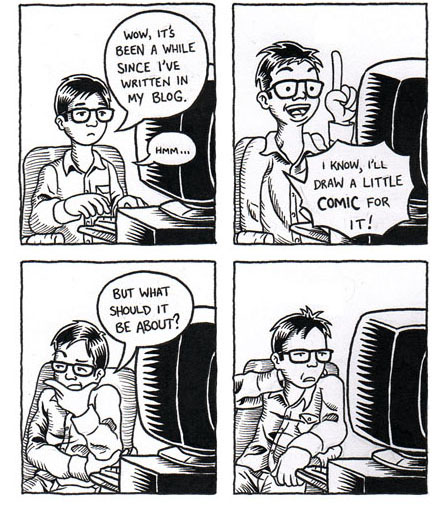
Tuesday, February 20, 2007

writing group

Sunday evening I had two poets over for workshop. Haven’t done workshop in years. Kent opened us a bottle of chardonnay and that probably helped loosen the ol’ tongue. I’m not a fan of workshop, really. I like it for community but I’ve never felt it returned value commensurate with the effort, time, anxiety put into it. I’ve learned what I’ve learned about revision through reading poems I like, yes, but mostly by sounding my poems, thumping them and shaking them, reading & rereading them, and allowing myself to cut them and mend them, to graft to them unwieldy limbs, to force march them down muddy roads, to let them take over and ride me. I’ve seen so many poems subjected to workshop that in reatction to critique only seem to get worse (mine included). I can’t remember any that improved. Such an event ought to stand out.

There were three of us working the shop. Alan Bern (who brought his new book, Waterwalking Berkeley), John Selawsky (a poem of his is here), and myself. I had more fun that I expected. I think the key was that I got to talk poetry. The particular poem didn’t matter so much. I would read the poem and talk about what I saw there, what I liked and disliked, what I thought clever, what I found tiresome. Did I do most of the talking? Probably.

When I searched for poems by John online I was amused to see DIR appear among the search results. Was invoking his name a summoning? Who knew the man would walk into my house eight months later?

Monday, February 19, 2007

God’s Bullies

from the diary: “Tuesday 4/29/86

“I’m finishing God’s Bullies, all about the ‘New Right’. Jerry Falwell and his cronies. Good book, icky people.”

On his website author Perry Dean Young writes, “I have to recall with some embarrassment and a little humor that I pushed my publisher to get this book out before the 1982 elections because I felt the religious right was a passing phenomenon, a mere blip on the national political scene. We needed to get the book out because the religious right would no longer be a force in future elections and my findings would no longer be relevant. Boy, was I ever wrong. Twenty-two years later, the religious right is now more powerful than ever. It is no longer a mere radical lunatic fringe, but a force that has quite literally taken over our government.”

Yeah, a lot of lefty commentators & bloggers seemed surprised by the ascendance of the Religious Righteous, as though they were some new phenomenon. I remember them clearly from early in Reagan’s reign. They never went away. Having deified George W. Bush one may hope the Rightites will crash and burn with him. Of course, Bushie hasn’t quite crashed & burned, has he? The steady downward march of positives in the opinion polls haven’t done much to thwart him. He sure as hell ain’t gonna resign.

Coming up to the 2004 elections I was predicting his ouster. After all, Gore didn’t really lose in 2000. No way would anybody who voted for Gore vote for Bush, and I was sure Bush hadn’t won more friends. As Young says, “We simply could not believe that a majority of our people had fallen for the lies and misrepresentations of George Bush and his administration. What made this defeat all the more painful was the fact that [we are] faced with one of the most immoral administrations in history. … And, yet, the people clamor for more of the same.”

Part of why I knew the Rightites never went away? I’ve been reading the gay press. The gay community has been the particular target of the Rightites all along. The homos seem to scare money out of the pocketbooks of little old ladies right into the sweat-damp pockets of the preachers. I guess most of the nongay left has been oblivious. Who cares about this gay stuff? As the relatively liberal Charles Barkely, in responding to the latest contretemps over gay men in the locker room, put it, “Gays don’t bother me.” But, then, he doesn’t much bother about them, does he?

Sunday, February 18, 2007

Spencer Selby

Spencer Selby is a poet. I’ve seen his work around and he maintains a helpful list of publications (many of them ezines) that feature “experimental poetry”. (I use the quotes because it’s the term Selby uses and because there always seems to be argument about what to call poetry other than the rhyming/conventional/mainstream/accessible sort; or, maybe, any sort?) It’s called Selby’s List.

He lives near the Claremont branch and one day while helping him at the Circulation Desk I mused aloud about how familiar the name seemed, “Spencer Selby … the poet?” And he did a doubletake, for what poet expects to be recognized, and we’ve since been nodding acquaintances. He has a new book, Twist of Address, and he left a copy with me Friday. I hope to get the library to buy it. We talked about having him read as part of Poetry & Pizza but that hasn’t come together yet.

Saturday, February 17, 2007

You Don’t Look 35, Charlie Brown

from the diary: “Sunday 4/27/86

“Dropped You Don’t Look 35, Charlie Brown in the library book slot.”

I loved Peanuts as a kid. I learned the word “depressed” from Charlie Brown. These were kids not involved in hilarious hijinks but ruminating about life. I bought lots of the mass market size reprints and they always said the strips inside were “selected from” some larger volume so I tried to find the larger volumes and sometimes succeeded. At one point, my ardor cooled and eager to get my hands on the new fave, I sold off my shelf-load of Peanuts to buy B.C. reprints.

A couple years ago I saw a batch of the Peanuts books in the Friends of the Library book sale, many of the ones I’d owned long ago, so I gathered them up. No, I haven’t reread them. But I see Fantagraphics has embarked on a project – reprinting all the Peanuts strips in a high quality format. Good for them.

Friday, February 16, 2007

Batman: The Dark Knight Returns

from the diary: “Saturday 4/26/86

“Biked to [Rohnert Park] to see [David]. Sat around all day. Readed hiz copy of DARK KNIGHT, Frank Miller’s new batman comic. eh. Glad I dint shell out the bucks fer it. Ceptin’ it’s worth three an’ five times the coverprice now.”

The Dark Knight Returns was Frank Miller’s rehabilitation of Batman (or, The Batman, as the supposedly more serious formulation has it). I’ve never liked Batman. OK, that’s going a little far. I was always disappointed in Batman. He didn’t have any superpowers, just, as Jack Nicholson’s Joker said, “wonderful toys.” His villains didn’t have superpowers either, just goofy costumes. And lots of henchmen. Yeah, so I mostly knew Batman from the campy TV series. I liked Frank Miller’s noirish version of Marvel Comics’ Daredevil, a blind lawyer who ran around at night fighting crime. Daredevil has superpowers, but they are fairly mild – no rays shooting from fingers or eyes, no superduper strength, no ability to teleport or burst into flames. Daredevil has enhanced senses. Though he’s blind, his sense of touch is so extraordinary he can pick up the patterns of ink on paper so read, his hearing so acute he can judge the shapes of objects by the sound that bounces off them. Stuff like that. I hadn’t cared about Daredevil till Miller took him on.

The Dark Knight Returns is set in the future. Bruce Wayne is old. Yet still in fighting trim, it seems. I found I didn’t really care. Tim Burton’s movie rehabilitation of Batman seemed to owe a good deal to Miller.

If you want a minutely detailed synopsis ofBatman: The Dark Knight Returns there’s one here: Dark Knight Storylines

Thursday, February 15, 2007

Reflections on Gender and Science

from the diary: “Saturday 4/19/86

“finished Reflections on Gender and Science by [Evelyn Fox] Keller – good book, dense. Couple stories into Ward Six and other stories by Anton Chekhov – very contemporary, good stories, hundred years old but not dated. Began The Ape’s Reflexion by Adrian Desmond.”

I didn’t remember a thing about Reflections on Gender and Science until I googled it. A review in Psychology Today says, “Keller argues that … scientists tend to choose dictatorial rather than interactive models of nature.” Science is objective and pure; it is unemotional and gives one control over the phenomena studied – these are male gendered notions. We ought to be able to think up other ideologies of science.

Wednesday, February 14, 2007

“Good Fences Make Good Neighbors”

In an essay about the conflict between the Israelis and the Palestinians, Amos Oz makes an aside, “[A]s the poet Robert Frost reminds us, ‘Good fences make good neighbors.’” Considering that Oz’s essay is about misunderstanding (as much as anything else) it’s a touch ironic that he attributes the good fences good neighbors sentiment to Frost. “Mending Wall” is at least as much a critique of it. Not an attack, no, but when Frost and his neighbor walk along the half-wreck of a stone wall that marks their property line, picking up fallen stones and putting them back, Frost gets to musing aloud about the purpose of the wall. “He is all pine and I am apple orchard. / My apple trees will never get across / And eat the cones under his pines, I tell him. / He only says, 'Good fences make good neighbors'.” In response to his neighbor’s unflinching refrain Frost says, “Before I built a wall I'd ask to know / What I was walling in or walling out, / And to whom I was like to give offence.” It seems to me the actual content of Frost’s poem (the whole here) would have borne Amos Oz in better stead than the quip.

Tuesday, February 13, 2007

Reflections of a Rock Lobster

from the diary: “Thursday 4/10/86

“I just read Reflections of a Rock Lobster, Aaron Fricke’s story about growing up gay in Rhode Island. It also tells how he came to take a male date to his senior prom. I remember seeing him and Paul [the date] on DONAHUE. He appeared on DONAHUE again, I think, a couple years later, this was after his book was out, also after One Teenager in Ten was out, cuz I remember Donahue holding up the books. I got [Reflections] today from the library – it belongs to the Solano County library so I got in on an interlibrary loan. It had a big paper on the front hiding the cover, just like One Teenager but I took that off.

“[When Mom came home] I had Rock Lobster open in my lap and after she finished [telling me what she’d been up to] I said, ‘I’m reading a book by that guy who took a male date to the prom.’ I showed her the cover. I said I empathized with the way Aaron was treated in high school gym class.

“… Mom and I talked more really openly about sex than we ever have.”

Monday, February 12, 2007

Wonderful Cut-Outs of Oz, part III

from the diary: “Monday 4/7/86

“Got a letter from [Baum Bugle editor] Doug Greene – bawling me out about [Wonderful Cut-Outs of Oz] review. I wrote back today, saying, ‘it was all my fault for sending the thing in late. Though I still like my original version better than your indented one.’ His mucked-up, junked-up one. I hate the stupid thing anyway. Hated it before he diddled with it. So I guess it doesn’t matter.”

The Baum Bugle is the main publication of the International Wizard of Oz Club.

Just seven days later I quote a letter from Doug Greene, “I thought we were corresponding amicably.”

This review remains my only contribution to The Baum Bugle. I am still an Oz Club member. I’m no good at writing to order.

Earlier posts on writing the review are here: part I and part II.

Sunday, February 11, 2007

The First Time

from the diary: “Friday 4/4/86

“Speaking of fucking (and we weren’t) today and yesterday I been reading The First Time by Karl and Anne Taylor Fleming. This should be required reading in high school. It helps to know that a lot of famous successful people had a hard time with sex. Dr. Benjamin Spock was a virgin when he was twenty, too. And coming (unfortunately no pun intended) right after For Your Own Good I pick up a lot of what Alice Miller said about children being the dumping grounds of their parents’ problems. We repeat our parents. Not always, and never exactly the same way, sometimes worse, sometimes better, but we get an incredible legacy.”

I’m not a big one for dumping secrets. I’ve read memoirs/personal essays in which the author seems to be telling all, and that’s fine, I can be shocked and amazed, and I can wonder what reaction others in their lives are having to seeing/hearing these stories told. I’m not a big one on keeping secrets, stuffing them away in boxes. But then at most my secrets are embarrassing, nothing criminal, no big betrayals or addictions, diseases or accidents or violations.

I didn’t really know enough about my mother’s story to be able to say with authority, “We repeat our parents.” And I knew a good deal less about my father’s story. It’s a pretty banal statement, though, isn’t it? We repeat our parents in so many obvious ways, what’s unreasonable about saying it likely our sexual lives are not without precedent? Mom, it seemed to me, was uncomfortable talking about sex, uncomfortable with the idea of sex, let alone the actuality. My sister, who knew Mom when Mom married her father, sister already eight years old, remembers a woman who wore form-revealing dresses, drank cocktails, and went out dancing with her handsome father. Sister did not consider my mother repressed.

Saturday, February 10, 2007

For Your Own Good: Hidden Cruelty in Child-Rearing and the Roots of Violence

from the diary: “Thursday 4/3/86

“I spent a couple hours of the afternoon reading Alice Miller’s For Your Own Good: Hidden Cruelty in Child-Rearing and the Roots of Violence. She traces Hitler’s early childhood, and says that children often act out the neuroses of their parents. Finished reading the book this evening.”

I remember this book in the office of Don, the therapist Mom was paying for me to see.

Friday, February 09, 2007

Dream Makers

from the diary: “Sunday 3/30/86

“I lay around all morning. Finished reading a book of interviews with sf authors -- Dream Makers. I’m now reading vol. 2.”

4/1/86: “I find I don’t like the interviewer. I don’t like his attitude. I enjoyed reading the words of the authors but I got more and more frustrated with Platt’s opinions. Maybe I’m glad there won’t be a Dream Makers 3. The [Santa Rosa] Library had another copy of the second volume so I was able to read from the book even though I hadn’t brought it with me.”

I used to read a lot of interviews. These days I tend to avoid them.

Thursday, February 08, 2007

what's new

I went downtown Wednesday afternoon to work out at the Y. I haven’t been in about a month. Every time I’ve stretched and exercised lately I’ve ended up with a headache so I’ve been rationing my exercise pretty carefully. Shorter stretches, longer recovery periods. Last two strong stretches did not result in headaches so at last I was able to muster some enthusiasm for a trip to the gym.

After an easy yoga and weights session I stopped at a café for a sandwich and coffee and read the latest East Bay Express, the feature article being about a real estate writer who got sued for saying allegedly defamatory things about one of those inspirational get-rich-quick real estate gurus. Turns out the critical things our writer was saying was nothing compared to what he uncovered during the lawsuit – a hit and run that left its victim brain-damaged, a robbery that resulted in prison time, an affair with an employee that had him admitting paternity of her child. Guru time!

Half Price Books had a couple carts loaded with clearance literature so I picked up Yukio Mishima’s The Temple of Dawn, Russell Edson’s The Song of Percival Peacock, Sylvia Molloy’s Certificate of Absence, and the 2006 issue of New American Writing, edited by Paul Hoover & Maxine Chernoff.

The Mishima is “the third novel in The Sea of Fertility tetralogy” (that’s one more than a trilogy). I know I have the first two. I didn’t think I had this one, anyway it was 50c. And I’m pretty certain I don’t have the fourth. Years ago I read Mishima’s The Sailor Who Fell from Grace with the Sea and thought it interesting and intense, plus Mishima’s life is its own kind of interesting. I’ve enjoyed Russell Edson’s prose poems. This is the first time I’ve seen anything under his name promoted as a novel. I don’t know Sylvia Molloy at all but the book’s from the University of Texas Press which pushes it as an Important Work of Latin American Literature (Molloy is Argentinian) and I would like to be well-read in Latin American literature so for a dollar I figured I could throw it on the growing pile. I have a few issues of New American Writing but none recent. Time I bought another, especially if I read it through. As I’ve said before I am buying (and actually reading) literary magazines again. I like the idea of adding them to the paperbacks collection at Claremont after. I’ve gotta bag up a bunch of ten and fifteen year old lit mags that I bought new, donate them to the Friends group or something.

Wednesday, February 07, 2007

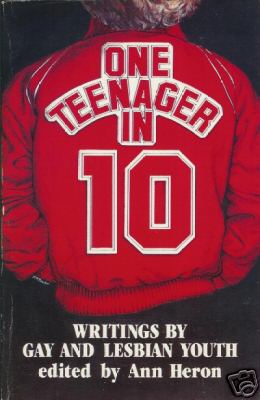
One Teenager in Ten

from the diary: “Wednesday 3/26/86

“Just read straight through a book called One Teenager in Ten. It’s writings by gay teenagers. Wow. Some of them were very intense. One sixteen year old girl wrote some pretty good erotica in recounting her first sexual experience with her dance teacher. I wasn’t turned on – but almost! Got the book from the library. I requested it and they got it from the Solano Library. Has a big paper wrapped around the front cover saying, 'NON-RENEWABLE, Interlibary loan' and such-like, also very conspiratorally hiding the book’s subject. In the back they offer to forward letters from gay people under 21. I qualify. Maybe I’ll try.”

I did send letters through Alyson Publications' penpal service. I'm sure I'll write about what happened as I read through my diary. Anyway, it also turned out Ann Heron, the editor of One Teenager, was an editor/writer at Nolo Press here in Berkeley when I got a job there after graduating Cal. I didn't work with her, exactly -- I was in customer service not editorial -- and my telling her that I'd read the book didn't lead us to much intimacy, still, it was kind of cool happening into her orbit like that.

Monday, February 05, 2007

Fit or Fat

from the diary: “Tuesday 3/25/86

“I’ve been reading Fit or Fat, a very interesting book that says that fitness should not be based on how strong you are or how fast you can run, but on how fast your heart beats. (Mine beats very fast – I took my pulse – which means I’m not in good shape.) You’re supposed to do an aerobic exercise that makes your heart beat 80 percent of maximum heart rate and sustain that level for 12 minutes.”

Since I read Fit or Fat the target heart rate has become orthodoxy. Everybody makes sure they include aerobic exercise in their healthful routine (don’t you?). Frankly, I find most specifically aerobic routines so boring they drive me crazy. The treadmill? Please. I like to walk, however, and if I have a destination in mind I can walk at a good clip, which presumably raises my heart rate to the aerobic. I long since stopped checking my pulse because, what, I’m going to walk faster & faster if I’m not at the optimum? And I’m already walking so fast my feet hurt? When I started walking to & from work at the Claremont branch (a 2 mile jaunt) I would get sweaty and, especially climbing the hill north of UC campus on the way home, would feel some strain. Now I breeze up the hill. And it’s not like I walk all the way every day. Usually I take the bus part of the distance.

One idea I picked up from Fit or Fat: you can be thin and fat. It’s one of those nicely contradictory notions that makes sense after the explanation. Y’see, you’ve got skinny arms, right?, but the muscle, because unexercised, is permeated with fat molecules. Strength-training isn’t enough to banish that intra-muscle fat because your daily meals typically provide enough fuel for muscle growth, especially if the exercise makes you hungry, eh? But if you build your heart muscle through aerobic exercise then even when resting your metabolism is higher, requires more fuel so burns up the stored fat. Fat is the lowest quality body fuel and during exercise your body burns sugars and proteins. It’s when you are resting that your body harvests the fat.

Sunday, February 04, 2007

Other Women

from the diary: “Saturday 3/22/86

“I started Lisa Alther’s third novel yesterday. Other Women. Finished it today. About a woman trapped in depression and the therapist who helps drag her from the ‘Dismal Swamp.’ I got engaged with the characters and was never bored. But the therapy sessions didn’t ring any bells and I couldn’t altogether relate to Caroline’s depression. I guess I got a different type. Just having my shitty patterns pointed out to me doesn’t help, the way it did for her.”

I'd read Lisa Alther's Kin Flicks (I thought the sex scenes hilarious), and I liked her second novel, Original Sins. Nothing in the bio at her website mentions Alther's sexual orientation, but one may suspect she's lesbian being that there are prominent sympathetic lesbian characters in each of her novels. In an interview she gets this question:

"Do you think people now tend to think of you as a lesbian novelist?

LA: I don't know what people think. I would imagine probably by now that's the conclusion some people are drawing, yeah.
"

Well, that's not exactly a "Yep, I'm gay" moment.

Alther elaborates:

"I was fortunate to have KINFLICKS be a best-seller. It meant what I wrote after that would be published even if it did have lesbians in it [laughs]. ... In OTHER WOMEN, I was writing about lesbians as people who love women but who also have this whole full life of paying their mortgages and raising their children. One aspect of their lives is that their partner is a woman. I've been a wife and mother, so I've done it all, so to speak." [I guess that's as close as she gets to coming out.] "Again, for centuries we've had to read about the heterosexual view of the world. Homosexuals can read heterosexual books and appreciate them, and I don't see why the opposite can't be true. [One] thing about writing about lesbians is that it's exciting to do because it's an area that hasn't been dealt with. And when it has been, it's had to be concealed in various ways. So to be in a position to be able to write openly about it is very challenging -- and not just about lesbians but about women in general."

Saturday, February 03, 2007

theory of series

from the diary: “Friday 3/21/86

“I checked out from the library Brian Aldiss’ Helliconia Trilogy. I don’t like reading a series unless I have all the books – if it turns out I don’t like ‘em, I can return them all at once; but if I love the story I can’t wait around for book three to become available – some year.”

Am I more patient than I used to be? A little. I intentionally took breaks between volumes of Kim Stanley Robinson's Mars books.

Friday, February 02, 2007

Waiting: the Whites of South Africa

from the diary: “Thursday 3/20/86

“Finished Waiting: the Whites of South Africa tonight. Was an okay book. Kinda dull.”

The premise of the book, if I recall aright, was that the Whites of South Africa knew they couldn’t stay on top indefinitely, knew, in fact, that their time would pass soon. What was soon? Nobody knew.

Wednesday, January 31, 2007

trying to cut back, part II

from the diary: “Tuesday 3/18/86

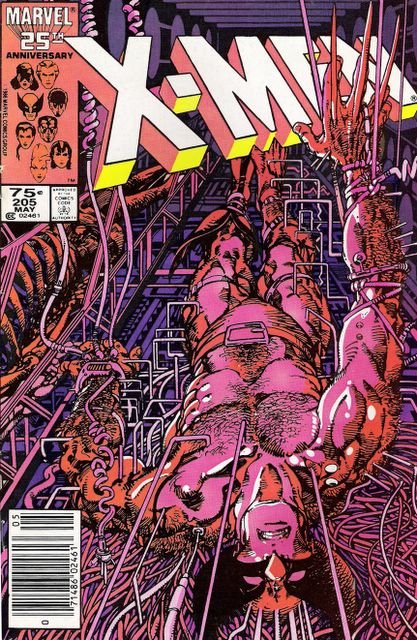
“Bot a couple comics at 7-11. Avengers and X-Men. Avengers was fun junk. X-Men was a long downbeat fight scene. Dreary. The X-Men is a comic full of great characters, too bad [writer Chris] Claremont doesn’t know what to do with them. I’m getting tired of X-Men. I’m close again to dumping it. Also close (closer) to dumping New Mutants. Especially since NM’s latest issue provides a great stepping-out place. Also very close to dropping Nexus and Masked Man. The comics I enjoy reading are dwindling to a depressing few. … I still reguarly buy 23 comic books and magazines (the mags being Isaac Asimov’s Science Fiction Magazine and Twilight Zone). … Avengers is still a ‘BUY’ because I’m loyal to it; it’s the first comic I ever collected. I enjoy watching the silly boobs put through their paces, it’s an adventure without too much pseudo-intelletualizing.”

In the diary I make reference to a “categorizing” list. I can sort of picture this. It was, let’s see, yes, it was a list with different categories, like “BUY FOR FUCKIN’ EVER”, “BUY ONLY BECAUSE IF YOU DON’T YOU WON’T KNOW HOW THE STORY TURNS OUT”, “BUY BECAUSE YOU’RE LIKE THIS ROCK ROLLING DOWNHILL AND THIS COMIC BOOK IS GRAVITY GRAVITY GRAVITY”, and “TALK ME OUT OF THIS, PLEASE!” I then sorted all the comics I was buying into these categories. I guess it did help me choose which ones to hold back on, the default position seeming to be BUY, provided I’d already been buying.

When I cleaned out my mother’s house I threw away all the stacked up Isaac Asimov’s Science Fiction Magazine and Twilight Zone. I hadn’t read many of their stories. Mostly I read feature articles and Asimov’s monthly editorial. When I had to contemplate jeeping them back to Berkeley and piling them all in a corner, there to hulk like some guilt monster waiting for me to get around to reading them, I knew the best solution was just to let them go.

I brought home all the comics though. And I do plan to reread them. But then what? I don’t want to hang onto them all forever. There’s no market for back issues anymore.

These days I only buy the occasional comic. King Cat Comics, American Splendor … I check out graphic novels from the library. Recently I read the first volume of Young Avengers. That was quite good.

(By the way, I don't think the X-Men issue pictured is the one I "bot" at 7-11, but it's within an issue or two.)

Tuesday, January 30, 2007

The Panda’s Thumb

from the diary: “Saturday 3/15/86

“Finished Stephen Jay Gould’s Panda’s Thumb.”

I loved Panda’s Thumb. Over the years I’ve read each of Gould’s collections of essays not long after they came out.

The thumb of the panda is not an articulated digit. It’s a wristbone that juts out. It’s rigid. But it makes the panda’s paw that much handier. The panda’s ancestors were meat eaters. At some point the panda switched to its famous bamboo diet. And the pandas who could most easily manipulate a bamboo pole in order to strip it of its tasty leaves were fatter and handsomer than those who were all clumsy-pawed. Fatter and handsomer means more kids (which, in panda terms, must mean two in a decade rather than one). Over time all the kids had handy paws. But why not a real thumb? Why a jury-rig thumb? The articulatable digits had all been spoken for. A jutting wristbone was an easier fix than reversing the fusing of the digits in that hefty bear paw. Nature/natural selection prefers the easier fix.

(OK, these guys say the thumb is not rigid; plus which they have pictures. And here is an interesting sequel of sorts, that includes a link to a pdf of Gould’s original panda’s thumb essay.)

Monday, January 29, 2007

origami

Kent and I walked downtown Sunday and had lunch at a taqueria and stopped in at a used ink cartridge store – or tried to; it was closed. For no reason I can think of (other than the nefarious) the brand new black ink cartridge that came with our Epson printer, the Epson announced (after printing no more than 20 pages), was empty empty empty and that was that. The stationery store downtown was closed, too. So we gave up on the errand and stepped into Games of Berkeley where we squeezed rubber duckies, gazed dully at the in-progress Star Wars board game, and wound up a somersaulting monkey. I bought an origami book because it was cheap and it was Dover and I don’t think I have one. Origami is one of those things that looks more fun that it is. I remember folding a snail, which ended up looking pretty impressive, but on the way I got so frustrated I hurled the instruction book across the room. Nevertheless I would like to be able to have some simple forms memorized – particularly how to fold a drinking cup and the ever-popular crane. At Half Price Kent did not find the newest Pynchon and at Comic Relief Kent said he preferred I didn’t buy him the book of illustrations inspired by Gravity’s Rainbow.

Dover, by the way, is a publisher that specializes in returning to print in inexpensive paperback books that have gone out of copyright. There are two Dover books that were significant to my childhood. One was The Wonderful Wizard of Oz. The Dover edition put up with a lot of abuse (I carried it around a lot) and is still intact (though some of the sewn signatures – sewn! unusual for a paperback – are a tad loose). The Dover edition was the only one available with the original Denslow illustrations. I loved that the Cowardly Lion was a giant cat, not a dude in a costume. The other book was It’s Fun to Make Things from Scrap Materials. It was a book sent to me (probably to me & my brother) by my dad. The book fascinated me and I would take it down from the shelf and study its old-fashioned looking drawings and read over the instructions and not quite want actually to get to work on making the crafts. I loved imagining the making though.

Sunday, January 28, 2007

David Bromige & Kate Braverman

from the diary: “Tuesday 3/17/86

“Marianne [Ware] hosted [the reading at the Russian River Writers Guild]. … The readers tonight were David Bromidge, a [Sonoma State University] professor, and Kate Braverman, who’s a Southern California poet studying at SSU. Bromige read a couple immense ‘meditation poems.’ Basically free association in complete sentences. I kept expecting the poems to resolve themselves into some kind of point, but they never did. I liked Kate’s work much better although all the pain and hate was too overwhelming for a longer reading. Mom came, too. We walked home together. Had another fruitless discussion – this time about poetry, sort of.”

Saturday, January 27, 2007

new mags

Yesterday on the walk to work I stopped at the Sather Gate Mall, which is under a parking garage, and browsed the literary magazines at the magazine shop. I’ve started buying lit mags again, partly because I have a place to put them when I’m done with them (I add them to the paperbacks collection at the Claremont library), partly because I’m actually reading them (I guess The New Yorker got me in the lit mag habit), and a little bit because I’m again thinking about sending work out via snail mail (don’t rush me).

So I stuffed the new issue of The Atlanta Review (that's a remarkably ugly website; the magazine, on the other hand, looks good), which is all poetry, and Saint Ann’s Review into my back pack. They join the pile by the bed. I’m trying to keep the pile realistic ...

Friday, January 26, 2007

Best Poems of 2006

When I’m reading a book of poetry and I read a poem I want to revisit I slip in a placemark. If, after 4 or 5 rereadings I decide I don’t want to leave the poem behind, I copy it out. I have been doing this since 1989; I have four loose leaf binders filled with other people’s poems. At the beginning of the year I sit down and read aloud all the poems I collected in the previous year. This year I collected 38 poems. 26 of those were haiku. All the haiku were from one anthology. I don’t think I’ve saved that much from one source before. What I kept (in alphabetical order):

Anselm Berrigan ….. “Mercy Flight”

Todd Colby ….. “Labor Day Picnic Poem”

Jordan Davis ….. “Fire Barns”

Amy Fusselman ….. “Journal”

haiku by Jennifer Brutschy, Paul O. Williams (2), Jane Reichhold, Jerry Ball, Mary Fields, Mary Hill, Garry Gay (2), Brent Partridge, Margaret Molarsky (2), Tom Tico (2), Christopher D. Herold, Jim Normington, Steve Sanfield (4), James Luguri (2), Robert N. Johnson (2), John Thompson (2)

Nicolas Guillen ….. “Wake for Papa Montero”

Aime Cesaire ….. “Ex-voto for a Shipwreck”

Allen Cohen ….. “Traveler”

George Green ….. “The Searchers”

Celtic prayer …. from the Carmina Gadelica

Paul Celan ….. from “BREATHCRYSTAL”

Eyak song/poem ….. “Lament for Eyak”

H. C. Artmann ….. “An Optician Has a Glass Heart”

Ko Un ….. “Drunkard”

Judy Grahn ….. “What do I have …”

sources (in parentheses # of poems collected from the source): Heights of the Marvelous c.2000, edited by Todd Colby, St Martins Press, NY (4); What We Carry c.1994, by Dorianne Laux, BOA Editions, Rochester NY (-); Smoke c.2000 by Dorianne Laux, BOA Editions, Rochester NY (-); Poems for the Millennium, vol 1: From Fin-de-Siecle to Negritude, the University of California Book of Modern and Postmodern Poetry c.1995, edited by Jerome Rothenberg & Pierre Joris, University of California Press, Berkeley CA (2); The Season on Our Sleeve: selected short poems c.2004 by Bill Knott, published by the author, Boston MA; Book of Hats c.2003 by Allen Cohen, drawings by Ann Cohen, Regent Press, Oakland CA (1); Parthenon West, a San Francisco literary magazine (1); The San Francisco Haiku Anthology c.1992, edited by Jerry Ball, Garry Gay, Tom Tico, pub by Smythe-Waithe Press, Windsor CA (26); Song of Rita Joe: autobiography of a Mi’Kmaq poet c.1996, by Rita Joe, with the assitance of Lynn Henry, University of Nebraska Press, Lincoln NE (-); The Best American Poetry 2005 c.2005, edited by Paul Muldoon, series editor David Lehman, Scribner NY (1); Poems from the Coffee Lands c.2004, “prepared for Starbucks Coffee Company by Tidbitbooks” (-); Well-Versed: poems for the road ahead c.2005?, editor uncredited, chapbook produced for AIG, an insurance and financial services group, shipped with an issue of The New Yorker (-); Beeswax Magazine, number one, Winter 2006, Oakland CA (-); The Best Spiritual Writing 1998 c.1998, edited by Philip Zaleski, HarperCollins NY (1); Ice Cream c.2005 by Lelyn Masters, self-published chapbook, Oakland CA (-); City of Buds and Flowers: a poet’s eye view of Berkeley c.1977 edited by John Oliver Simon, Aldebaran Review, Berkeley CA (-); The Work of a Common Woman c.1978 by Judy Grahn, The Crossing Press, Freedom CA (1); West Branch, sp/su 2006, #58, Bucknell University, Lewisburg PA (-); Afterbeats c.1991 by D. Jayne McPherson, Norton Coker Press, SF (-): The New Yorker, from a year’s subscription between 2004 and 2005 (1); Poems for the Millennium, vol.2 c.1998 edited by Jerome Rothenberg & Pierre Joris, University of California Press, Berkeley CA (2)

And if you’re curious:

Best Poems of 2005

Best Poems of 2004

Thursday, January 25, 2007

Ann Landers

from the diary: “Friday 3/14/86

“I wrote to Ann Landers, not asking for advice, giving it. A familiar comment of hers upon acknowledging a mistake is to say, ‘fourteen lashes with a wet noodle.’ Well, today in response to a criticism of some hospital-visiting etiquette advice that she flubbed she said, ‘twelve lashes with a knotted bedsheet.’ I was so horrified by this image – Ann Landers being whipped with a knotted bedsheet! – that I had to write to her.”

The Ann Landers column and the Dear Abby column were written by identical twin sisters. Ann was the more conservative of the two. Abby was the sassier – she never had to be educated about the truth about gay lives. Ann, however, counseled counseling toward cure. She eventually saw the error of her advice – after much thwapping with a rolled up rainbow flag, no doubt.

Wednesday, January 24, 2007

letters page

from the diary: “Thursday 3/13/86

“I just … read the letters page of Ms. Tree and … [ellipsis in original] Anyway there was a letter that really made me angry – this asshole moralist who claimed that homosexuality was immoral and that homosexuals are created by older men. He was also down on pornography. He then proceeded to express his indignation at a perceived case of prejudice in the characterizations of the anti-abortionists in a recent story.”

When I started reading comics I didn’t read their letters pages. Tell the truth, there were times I barely read the writing in the word balloons and just liked flipping the pages. By 1986, however, I was reading everything printed in the darn things. They weren’t 25c a pop anymore. And some had lively and entertaining letters pages. I recall Ms. Tree (a hardboiled female detective) and Jon Sable (a freelance secret agent) hosted arguments about gay rights in their letters pages because both dared to introduce gay characters. There were the usual haters and, naturally, I got exercised about their cruel and nonsensical screeds; but there were also compatriots – thank yous and personal testimony. No gay kisses allowed in the actual art, not for awhile. I’d say comics were still aggressively het. No superhero, certainly, was allowed to be out. John Byrne introduced a closeted gay superhero in his Alpha Flight (a Canadian version of the X-Men). But that character was so closeted not even the readers knew. (Though I remember a friend vehemently laying out the clues for me.)

Tuesday, January 23, 2007

Gopnik on wine

In the September 6, 2004 New Yorker Adam Gopnik reviewed a couple books on recent wine history.

“Remarkably, nowhere in wine writing … would a Martian learn that the first reason people drink wine is to get drunk. To read wine writing, one would think that wine is simply another luxury food, like smoked salmon or caviar or chocolate; the one idea that is banished is that it is a powerful drug, which can wash away, in a few minutes, the ability to discriminate at all. … For it is not wine that makes us happy for no reason; it is alcohol that makes us happy for no reason. Wine is what gives us a reason to let alcohol makes us happy without one. … The language of wine appreciation is there not because wine is such a special subtle challenge to our discernment but because without the elaborate language – without the idea of wine, held up and regularly polished – it would all be about the same, or taste that way. … A good fruity bottle of a Santa Barbara Pinot Noir, with a pretty label and a decent story, makes us happy, and happier than that we don’t really deserve to be.”

Monday, January 22, 2007

more rumination on diaries

from the diary: “Tuesday 3/11/86

“I [see] in the stores, in libraries, published journals and I read them and they sound so interesting. They describe the landscape poetically, they detail the physical features of friends, relatives, dash off brisk lines about how ‘Mama tamped her pipe with her little finger and fixed me with one clear eye as she said –‘

“Am I too self-centered to see all that? It never sounds right on paper to say that about real people. I can have fictional characters run through my motions, but I feel uncomfortable doing it with real people.”

And with that I filled the last page of the spiral bound journal in which I had been writing.

Sunday, January 21, 2007

Don Emblen books

Yesterday Kent & I went up to Sonoma County to visit a couple friends. We stopped in at the home of Don Emblen, a professor of mine at SRJC. Since I left town he’s served a stint as Poet Laureate of Sonoma County and he continues to produce small print runs of books and broadsides on his clamshell letter press. I got from him three of his books. Dozy, poems about the cat that was rubbing its black length against his ankle, By the Dozen, a collection of short poems, Notes from Travels, which I think I read twenty years ago when it was new but probably a library copy, and Want List, which was published by Running Wolf Press when Don was enlaureled.

Saturday, January 20, 2007

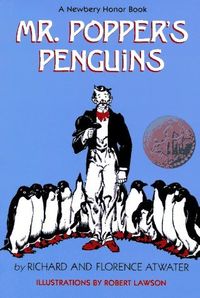
Mr. Popper’s Penguins

from the diary: “Sunday 3/10/86

Mr. Popper’s Penguins “irritated me because the characters wondered, ‘Gee, why aren’t there any penguins in the Arctic? Wouldn’t it be a great idea to make up where silly old nature was deficient and plop some penguins down there?’ Sadly, the [flightless] great auk, the first to hold the name ‘penguin,’ was just as delightful and fearless as the southern penguin. Nature was very generous in her supply of great auks. Mr. Popper’s ancestor’s (and mine, more’s the pity) took their liberties with the auks, wiping them completely from the face of the earth. I find it hard to ‘wow’ over Mr. Popper’s good-heartedness and awesome ignornace.”

Friday, January 19, 2007

The Nazi Extermination of Homosexuals

I checked out the book in January but didn’t get started reading it till March.

from the diary: “Sunday 3/10/86

“[I]n The Nazi Extermination of Homosexuals there isn’t a lot of ‘oh my god’ eyewitness stuff the way there is in Jewish histories because there just aren’t the eyewitnesses – they’ve been killed or just driven underground by the vilification of gays that never stopped – gays were hated just as much after the war as during or before. They are still afraid in Germany – especially East Germany – to speak out. It’s a devastating irony that Jews can condemn recognition of the homosexual agony, as ‘a travesty’ as one prominent Jewish historian is quoted in the book, as though there was some hierarchy of suffering, with legitimate and illegitimate claims to pain, a more-pitiful-than-thou attitude that stinks of hatred and prejudice in a way that calls to mind the Nazis themselves. Of course I needn’t mention Kahane and his Arab-hating in modern Israel to further highlight the irony of oppressed people becoming oppressors. Gay nazis (before they were purged) hated Jews. Jews hated/still hate (as do gentiles, moslems) homosexuals. It’s a disease of the human species, I suppose, this emotional violence toward a group of its fellows mainly on the grounds of difference.”

Thursday, January 18, 2007

Heidegger v. Miller

Jason Epstein, a longtime New York editor, in his Book Business: Past, Present, and Future, is speaking about the spread of literacy: “Greater literacy will not reduce the human capacity for mischief any more than Martin Heidegger’s philosophical learning kept him from supporting the Nazis, a dilemma that philosophers might explore further.”

The book is dedicated to Epstein’s wife, Judith Miller, the New York Times reporter that did so much to sell the Iraq war (as mouthpiece for Dick Cheney’s version of the world) via the pages of the Gray Lady. How many deaths should she be held responsible for? Heidegger?

Wednesday, January 17, 2007

Plan Colombia

In the Fall 2006 issue of The Berkeley Review of Latin American Studies, a journal published by the Center for Latin American Studies at the University of California, Berkeley, there’s an update on Plan Colombia written by Daniel Coronell.

“In 2000, the United States and Colombia undertook a huge campaign to strengthen Colombian institutions and fight drug trafficking. … [O]ne specific goal … was to reduce cocaine trafficking to the United States by 50 percent over five years … by 2006 the total area of coca cultivation … would be reduced by half and the price of cocaine on U.S. streets would double.

“In an effort to achieve this goal, $10.6 billion -- $3 billion more than initially planned – has been spent. … The areas of cultivation in Colombia are … larger today than before Plan Colombia was instituted. In 1999, an estimated 122,500 hectares were planted with coca. In 2005, this number reached 144,000. … [T]he Colombian government has conducted massive spraying in the areas indicated by the United States [but] coca has reappeared in new areas or in areas that were not previously evaluated."

And the price of cocaine? “[T]he ‘retail’ price of one gram of cocaine was $135.51 in 1999 and $106.54 in 2003. … [C]ocaine is cheaper than ever.” I presume Coronell has reason to figure the price hasn’t appreciably increased since 2003.

When Plan Colombia was set in motion coca growing regions were predominantly controlled by leftist guerrillas. Sadly the peace process meant to rein them in fell apart and Alvaro Uribe, the president elected in 2002, switched his attentions to “right-wing paramilitary death squads. … When the possibility of a peace process with the Colombian government opened up, some drug lords not previously tied to paramilitary activity began to associate themselves with these right-wing militias. According to a Colombian police report, some drug lords bought militias for sums ranging from $10 million to $50 million in order to gain political status, avoid extradition to the United States [up till then a very real concern; remember Pablo Escobar?], dialogue with the government, and disguise their drug-trafficking activities.

“Despite the spraying, the size of the area under illicit cultivation had not changed since Plan Colombia was implemented. Instead, coca cultivation had moved from areas under guerrilla influence in the southern region of the country to areas under paramilitary control. Today, coca is grown closer to Caribbean and Pacific ports and to various urban centers.”

The U.S. government (that’s us, right?) paid ten billion dollars to lower the street price of cocaine, to increase the area of coca cultivation in Colombia, and to move that crop closer to ports and cities -- not to mention soak vast acreage (and the people and animals living there) with herbicides. Fun, huh? I wonder how much of that money came “back” to the U.S. via the arms and chemicals industries.

Monday, January 15, 2007

new stuff

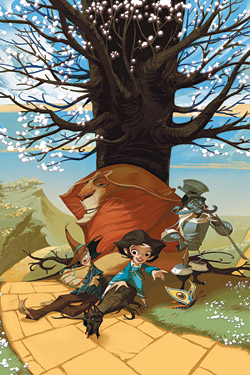
I looked at the new comics adaptation of The Wonderful Wizard of Oz and found it strange and not Ozzy. But as I looked at it I realized that the drawings which seemed to be made of smears of glass had a flowing yet jagged quality and the illusion of movement began to impress me; also the text was often lifted right from L. Frank Baum’s original. I didn’t buy it. I probably would have but at the time I was already late for an appointment.

I thought about it a bit more and decided to give it another look but when I inquired at Comic Relief found they’d sold out. I was assured a reorder would be placed. I stopped in yesterday and it was again on the shelf. The art is by Enrique Fernandez; it was originally published in France. At ten dollars it seemed not a terrible extravagance so I picked it up and on my way to the checkout counter my eyes lit on Mike Ploog’s comics adaptation of Baum’s The Life and Adventures of Santa Claus, discounted to ten dollars. I haven’t yet read The Life and Adventures of Santa Claus, although I bought a copy long ago. I ought to get through a first reading of Baum’s works, if it really matters to me. Anyway, now I have two new comics versions of Baum.

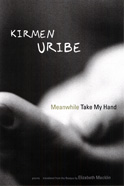
Today I went for a walk in the late afternoon light. It’s been quite chilly the past few days, so I bundled up. On the loop home I stopped in at Black Oak Books. While browsing I remembered the news that Black Oak is for sale. As I’ve been carrying around a credit slip for the last year I thought I better use it up before it becomes useless. I confess I didn’t think of it till I was holding Elizabeth Macklin’s translation of Kirmen Uribe, a new book, Meanwhile Take My Hand. At $4 it was an easy sell. Then I remembered the credit slip. It was an $8.50 credit slip. The challenge: could I find a book for $4.50? I did not. In fact, the more I looked around, the less I wanted anything. Being as these days I’m working in the library, buying books merely to read them (rather than because there is some personal connection) seems excessive. Or did so at that moment.

Eventually I came across a copy of Allan Gurganus’s The Practical Heart. Kent has enjoyed Gurganus books so I thought I could bring it home to him. At $7 it was not $4.50. On the other hand the two books together came to less than $4, which, as I noted in the last paragraph, did not strike me as beyond budget.

Kirmen Uribe is a Basque poet. I included one of his poems in the issue of Hogtown Creek Review for which I guest-edited the poetry section and was tickled to see the magazine listed on the acknowledgments page. Ah, the reason there is an acknowledgments page – for the magazine editors! I recall I solicited poems from Elizabeth Macklin and besides her own she sent along some Uribe translations. I chose one of hers and one of his. Not long after that Uribe and his band came to town. We hung out with them at La Pena, talking mostly with the one who knew English.

Sunday, January 14, 2007

bite

So I've been reading a paperback. I'm about halfway through and I notice something on the back cover. An arc curved around the top of the spine. It's tooth impressions. Somebody bit this book. No corresponding bite marks on the front. Where was the lower jaw?

On page 199 I discovered the other half of the bite. "Maybe they needed their hands, for finding their keys?, so they held the book between their teeth to use their hands," Kent suggested.

Saturday, January 13, 2007

P&P poets

Last night at Poetry & Pizza we had Murray Silverstein and David Shaddock. Both had books. Silverstein's is brand new. Shaddock's Dreams are another set of muscles is rather older -- there's an intro by Denise Levertov. Both poets were both good.

I'm impressed by the cover of Silverstein's Any Old Wolf. Sixteen Rivers is a collective of poets who are essentially publishing themselves. David Bullen, the man who did the cover design, is a pro. I wonder how much he cost?

Friday, January 12, 2007

a round up of some reading

from the diary: “Saturday 3/8/86

“Reading One Cosmic Instant, interesting but the style is textbookish. Also read tonight Who Stole ‘The Wizard of Oz’, which was fine. The Wizard was just one of five books that were stolen [from an elementary school library]. The solution to the mystery involved Alice and Thru the Looking Glass more intimately than Wizard. Finished Mickelsson’s Ghosts in bed last night. Liked the book, and the ending was good. The killer Danite was bizarre and Mickelsson’s ruminations on the meaning of music were tedious, but other than that I enjoyed the bulk.”

“Sunday 3/9/86

“One of the reasons I keep this journal is I wish a record to exist of my development from scared little rabbit to imposing (if only in reputation) literary figure. I wish my life to be like a novel, so one day my journals can be published and all my sins and niggardly little thoughts, my joys and such, can be pawed over by eager students in search of the genesis of my genius.

“But – oh, ho, ho – what a thing! Not so sure I have any genius or that this journal is the least bit interesting – I read it over myself and am amused by its triviality. Often, it seems, I leave out the most important incidents and crab about whatever’s on my mind at the moment of writing.

“Today, anyway, was a miserable, perhaps mournful, drone of steady rain. Kept me inside bed to bed. So I vacuumed the dining and living rooms, also the stairs. Having finished One Cosmic Instant (life have a purpose? how silly), I am now reading a short book with the formidable title, The Nazi Extermination of Homosexuals. Haven’t gotten to the ‘oh my god’ parts yet. So far just the ol’ Hitler youth and so on.”

Thursday, January 11, 2007

trying to cut back

from the diary: “Tuesday 3/4/86

“There was a new issue of Jon Sable [at the comics store] but I passed it up. I don’t like Mike Grell’s new sketchy/sloppy style. I don’t care about Jon’s love affairs. I’d rather not buy another ‘killing animals for the fun of it’ safari issue. Grey (Gray?) is left totally undeveloped – he’s gay, wow, but so what? And the buck seventy-five is too much of a pinch. As soon as the current storyline of Nexus resolves itself I’m dumping that. John Byrne is leaving The Fantastic Four soon, so I’ll take that as a convenient cue to bow out. Timespirits was canceled and the latest Elric limited series just had its last issue. Only four more issues of Mage; it runs out on issue 15. I’m whittling down my regular collectibles both voluntarily and involuntarily. Timespirits being the latter. Y’know, soon I won’t be buying any First comics. From everything they published to nada.”

Wednesday, January 10, 2007

a friend in the night

I think my protestations about science fiction (see this post) were more a fit of pique at my mother than a real dislike of sf. Fact is, there are a lot of things I like about sf. And during this time I was even trying to write sf stories, including one set in a post-apocalyptic city, in which an orphaned boy is befriended by a woman called “The Filcher” whose skin has been turned to crusty scales or plates by exposure to noxious chemicals or radiation. I’m sure I’ll run onto it again sometime. The story never really managed to gather a plot, though it’s probably still one of my longer pieces of prose fiction.

Here’s a description from 3/1/86 of meeting a cat on a cold evening walk: “When it first saw me [the white Persian] arched its back. I called, ‘kitty kitty kitty kitty,’ as I approached but it hissed. I tried plaintive mewing. That worked instantly. The cat stopped arching, looking hostile, and settled on its haunches. Not going too near I crouched, held out one hand with fingers extended, so the cat could sniff the tips, and alternated my mewing with ‘kitty kitty kitty.’ The cat stepped closer, three forward, one back. It sniffed my fingers and jumped away. Came again and sniffed my fingers. Went around behind me and rubbed against my back, still shying from my hands. Then I got a stroke in. It moved closer. And I had a friend. The cat had no collar, it looked like a real Persian with pure white hair and smashed-in face, but its fur was badly matted. No one had brushed it in a long time. Cat smelled faintly of dog. But someone had loved it once because the poor babe warmed right up. Purred, purred. Climbed into my lap, didn’t mind being picked up (but didn’t like being held long). Adored the attention. Nice for me, too, encountering a friend in the night. I wanted to find out if the cat was lost, but what could I do? Couldn’t carry it home. Way too far. So I left. Cat followed me a little ways, stood watching me in the middle of the sidewalk until I walked from sight.”

Tuesday, January 09, 2007

pile of reading 2/86

Mickelsson’s Ghosts by John Gardner

The Panda’s Thumb: more reflections in natural history by Stephen Jay Gould

The Seven Mysteries of Life by Guy Murchie

Other Women by Lisa Alther

One Cosmic Instant: man’s fleeting supremacy by John A. Livingston

The Nazi Extermination of Homosexuals by Frank Rector

Who Stole the Wizard of Oz by Avi

Dancing the Gay Lib Blues by Arthur Bell

The Year of the Whale by Victor B. Scheffer

Waiting: the whites of South Africa by Vincent Crapanzano

Mr Popper’s Penguins by Richard & Florence Atwater

The Best American Short Stories 1978 by Ted Solotaroff, editor

The Ape’s Reflexion by Adrian J. Desmond

A Farewell to Arms by Ernest Hemingway

Fit or Fat? by Covert Bailey

After the Goat Man by Betsy Byars

“That’s sixteen books. More heavy on science than usual. It breaks down to: three adult novels, three children’s novels; six science books; one book of short stories; three sociology/history books. I’m collecting about twenty comics on a regular basis – not even half of them are monthly. That’s down a lot from a peak of about forty. I expect to go down more, gradually. Probably will be some I’ll keep collecting a long time -- Cerebus, Love and Rockets, a few others.”

Monday, January 08, 2007

The Blue Planet: a celebration of the earth

from the diary: “Thursday 2/27/86

“I finished The Blue Planet: a celebration of the earth and returned it to the library. Not much of it stuck, but she had a nice style. Rather put me to sleep, tho’.”

Blue Planet, besides its soporific qualities, had a lot interesting of things to say about Earth as a dynamic system. I remember the author talking about beaches and how they are built through natural processes. Beaches are built via the action of winds, waves, tides, and living things. There are beaches built of different kinds of sands. In Hawaii there are white sand beaches (ground-up coral), black sand beaches (ground-up lava), and a green sand beach or two (ground-up olivine, which is a kind of volcanic rock). She even describes a beach built of flattened tin cans.

There's an excerpt from the book here. Coincidentally it's from the author's ruminations on the shore.

Sunday, January 07, 2007

Waking the Poet

from the diary: “Tuesday 2/25/86

“I think Paul [Mariah] is trying to reach out to me. Lending me books, two tonight, Poetry Handbook and On Beyond Koch, a book of kids’ poems and teaching poetry. He tries to think of things, I think, that will help me, and passes them on. The last thing I should be is insulted, as I rather was when he lent me Waking the Poet. ‘Is this his way of telling me I’m not a poet?’ I thought.”

I don’t remember any of these books.

Paul Mariah led a poetry workshop that I had been attending. As I didn’t have a car Mom would come, too. She refused to let me have a driver’s license so long as I couldn’t pay the insurance, and I didn’t have a job so I couldn’t pay the insurance. There were not many job prospects in Sebastopol and anyway I was depressed and having anxiety attacks at the thought of asking anyone for a job. I told Mom “I’d called the Suicide Prevention hotline, got a recording, and decided to watch ‘Agronsky’.” (Agronsky and Company was a PBS political chat show. ) So she called up Don, the man to whom she'd been sending me for counseling. She paid the counseling bills, thinking she was getting better value than if she'd paid the car insurance bill. ... I doubt it. Anyway, Don insisted I come over to Santa Rosa and meet him. I rode the bus. He told me, "'God helps those who help themselves,'" and he "gave me a card with six 'important principles' that I 'must learn' [including] 'life is really yours'." I remember him telling me repeatedly that I had to take responsibility for my life.

He did offer to make an appointment with a psychiatrist who might put me on medication. Oh? I thought. That might be useful. Unlike everything you’ve done up to now.

Friday, January 05, 2007

what's new

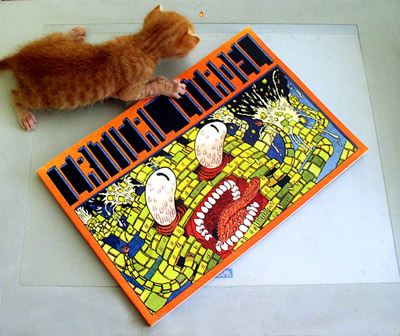
I bought today at the comic shop: Critical Citadel, which has some sick funny stories in it. Some of it made me think of a gentler Mike Diana; don't click that link unless you're ready for a gross-out. (If you want a picture-free story about Diana you can check the wikipedia article.)

At Half Price Books I picked up an old copy of Piers Anthony's second Xanth novel, The Source of Magic. I recently read the 4th and 3rd Xanth novels (in that order) so I figured I might as well work my way on back to the first. Besides, it was only $1.22, which I paid for with pocket change.

Sunday, December 31, 2006

The Wonderful Cut-Outs of Oz, part II

for Part I go back in time.

from the diary: “Friday 2/21/86

“Can y’believe I’m actually cutting out the Cut-Outs? It’s taken me an hour and a half to cut out half the book. And I haven’t glued any of ‘em yet.”

Then on the 24th I wrote, “[F]inished cutting out the Oz characters. Now hasta glue ‘em. And do the review and send it in tomorrow or the next day.”

On Tues 2/25: “I have one day – tomorrow – in which to glue all the Oz cut-outs and write the review. arg. and mail it, too.”

On Wed 2/26: “I’m working on the cut-outs review. I just did the first version and marked it for revision. I finished glueing all the characters’ bases this afternoon. Boriiiing. I’ve gotta wait till tomorrow to finish the review and type it. The pasting was what I did most of the day.”

On Thurs 2/27: “More misadventures in the life of the Cut-Outs review. I’m still working on it.”

On Friday 2/28: “After yardwork I took a shower and returned to the Cut-Outs review. I finished it. Took me about two hours and I don’t much like it, but I typed it and went down to the post office and sent it off to Doug Green [the editor of the Oz Club’s Baum Bugle]. I hope he finds it satisfactory. I’m on the verge of hating the thing. I mailed it today, one day before the deadline. It probably won’t arrive till Monday or Tuesday, two or three days late.”

Thursday, December 28, 2006

Sex and Destiny, part II

from the diary: “Wednesday 2/20/86

Sex and Destiny just got interesting. Too bad it’s the end of the book – all that I waded through, but I think the conclusions may be worth the time. Homo Occidentalis may very well fade out, stop reproducing and fade away as the folks who aren’t so squeamish about bearing kids carry on and carry on. That means 3rd World people becoming Only World people. Provocative.”

Homo Occidentalist would be Western Industrialized People, right? Germaine Greer would hardly be the first to predict the end of (a) civilization.

I remember holding this book, its gray and white cover, a paperback with a hard plastic durashell glued to it (library book). I remember reading much of it sitting up on the couch, ill. (The jpg is pretty much how I picture it in my memory though I would have said more gray than sepia.)

Meanwhile I was trying to keep The Oogaboo Review going so was soliciting work that never saw print. And I entered the Writers of the Future contest, sponsored by L. Ron Hubbard. “I hope L. Ron Hubbard’s death doesn’t affect the contest,” I note in the diary.

Wednesday, December 27, 2006

Sex and Destiny

from the diary: “Tuesday 2/18/86

“The Hwy 12 bridge out of town toward Santa Rosa is under water. …

“Mom returned the second [wet/dry] vac this morning and rented another. This one worked fine. …

“Reading Sex and Destiny by Germaine Greer. I’m reading it compulsively. I don’t know whether it’s because the book is so good (it’s not bad) or because I can avoid other things while I’m reading.

“The library was closed again today. I finally got out of the house, did some walking around town [Sebastopol, California]. The wind wasn’t bad and the rain intermittent so I didn’t get real wet. Walked down past Pellini Chevrolet but there was a cordon at True Value Hardware. Just a half block away the water had crept. Half swamped the deli parking lot – the businesses behind and lanes were covered.” Well, not covered covered. Surrounded by water.

Sex and Destiny is the only book by Germaine Greer that I’ve read. She’s most known for The Female Eunuch, published in 1970, which helped galvanize the Women’s Movement. As I recall Sex and Destiny was a history of the birth control movement and how its origins are linked with eugenics. Eugenics is selective human breeding. Sterilize the stupid, discourage the reproduction of the inferior races. One of the ideas that formed the complex that justified the industrialized genocide of World War II Germany. Greer seemed to use that historical conjunction to tar birth control with the evils of eugenics. And I sympathized with her notion that in the non-industrialized world women are more free than in the industrialized world, even though they had no birth control. But their relative freedom and social status isn’t because they pop out babies all the time. It’s because, as Hilary’s book has it, “It takes a village to raise a child.” Child-rearing in pre-civilized culture was communal. A child didn’t have just one Mommy but many and men were more involved in caring for children. In civilized industrial society the basic unit is the individual (or an atomized version of the family, “nuclear” anyone?) rather than the tribe. If you have kids you alone are responsible for them. Since my mother and father broke up when I was small, all I remember growing up was a single parent. She struggled for money; and I have often felt a sense of deep loneliness (which may be associated with the loss of my father and older brothers and sister, or may just be me, who knows). Humans probably do best in small and close interdependent units, units that are linked to larger groups through language and genetics and trade. I’ve spent the day by myself so far. I think it’s time I went out for some lunch, allow myself proximity to people.

Tuesday, December 26, 2006

The Cider House Rules

from the diary: “Monday 2/17/86

“[M]ost of the day spent wrangling over wet/dry vacs. The one we got yesterday turned out to be a water sprayer. The motor vents – after the initial buckload – started ejecting water in forceful little jets. So we took it in and exchanged it for a smaller model which was not on sale, but cost the same. That one worked better. It got a full load and a half before its vent started to spray water, but this vent pointed straight up so it was like a misty rain. Immensely irritating. So there’s still a lot of water [flooding the basement] furnace room.” And most of the rest of the basement.

“Just finished The Cider House Rules by John Irving. Long Book. Not bad.”

I think I haven’t read a John Irving book since. I read World According to Garp and The Hotel New Hampshire before Cider House. I’ve rather intended to read more Irving but there’s always plenty to read, isn’t there? I remember liking Garp but preferring the movie version both because it captured the funny, odd personality of the book and because it dispensed with the author protagonist’s fiction, which had gotten in the way in the novel. Hotel New Hampshire’s screen version, as I recall, was quirky, too, but didn’t quite manage to avoid being a bit creepy as well. As I recall, ever searching for a gay character, that there’s a butch lesbian in Cider House who ends up stalking somebody, the main character?, but I still thought her sympathetic, as peculiar John Irving characters go. I wonder if she made it into the film? I haven’t seen it.

Monday, December 25, 2006

Beyond the Chocolate War

from the diary: “Thursday 2/6/86

“Finally finished Breaking with Moscow. Am reading Beyond the Chocolate War.

“Mom and I went to the art show reception at the library this eve. Ron Megorden and three others. I wanted to talk to Ron, but couldn’t gather the nerve to say anything while his friends were around. So I only said, ‘Hi,’ when I came in. I talked to one of the other artists, Sam somethingorother (Sam, short for Bruce, no actually for Margaret, which she hates). She did marvelously detailed vivid paintings. She’s done some children’s book illustration, which was on display in original form and two printed books – one by Isaac Asimov called Did You Know (I think) filled with clever trivia for kids to wow over. The drawings were fun. Mom annoyed me by introducing herself as my mother, me as her son, anyway, and saying I was a big science fiction fan (which I’m not). This was after I’d talked to her [that is, thought the conversation over]; Sam said, ‘You didn’t tell me you were into science fiction.’ She offered to give me some old sf books from the forties. I said thanks but no thanks, I wouldn’t know what to do with them. I told Mom when we got home that I wasn’t and never really had been ga-ga over reading science fiction. I don’t read that much sf, D[avid]’s always read much more than I.”

Wednesday, December 20, 2006

Breaking with Moscow; coming out to Mom II

from the diary: “Friday January 31, 1986

“I was reading Breaking with Moscow by Arkady Shevchenko, sitting in the rocking chair, Mom came in and sat on the hat box.

“’When did you start feeling like you couldn’t get along with girls? Early? Or in high school?” Not interrogating, just curious tone.

“’Mom, I love girls. Girls are great people.’ Most of my best friends are girls.

“I don’t remember what she said next, but my answer was: ‘Ever since I’ve had sexual feelings they’ve been for men.’

“She expressed some reservations on the wisdom of the ‘choice.’

“I said, ‘Mom, I wish God had lined us all up before we were born and said, “Here, I’m giving you a choice. You can be a white, upper class American male or you can be a female Untouchable in Indian.” Now, that’s a choice. Too bad we can’t make these “choices.”’ Nice evasion, don’t you think? That way I didn’t have to say I would rather be straight but God burdened me with being gay. This way you can read it the way you want and I can still believe being gay is not my bum rap, it’s being scared that’s the shits. I still got the same feeling of anger and fear like a hot stone in my stomach when she asked me about getting a job.”

Monday, December 18, 2006

Coming out to Mom

Twenty years ago I came out to my mother. Here’s the account I wrote in my diary that night. [Don, mentioned below, was the therapist Mom was paying for me to see.]

from the diary: “Thursday, 1/30/86

“I told Mom. Used Don’s phrase, ‘I think I might be gay.’

“’Might be getting … ?’ she asked.

“’Jee. Ehyee. Wahyee.’

“’Oh.’

“Let me tell you how this happened.

“I’ve had this recurring (physical) pain in my right shoulder for, what, a week or so. It usually only hurt when I moved my arm a certain way and I didn’t move my arm that way very often so I tended to forget there was anything wrong. Well, last night I went to bed around two, trying to reverse the trend of going to bed later and later – if I got enough sleep maybe I wouldn’t waste the entire morning abed, plus maybe I’d feel better, maybe f’rinstance this pain in my shoulder would go away. Even before I went to bed it was getting pretty bad. But the longer I lay there, the more I tried to relax, the more I tossed and turned the worse it got. Finally the pain (like a constant excruciating pulling inside my right shoulder, upper arm and neck stretching up to my chin) got so bad I started whimpering and moaning and tossing frantically in bed; of course none of that worked. Mom heard my cries and came in. I asked her to massage my shoulder – more like begged. Went out to the couch and lay on my stomach. She started gently rubbing my back and I said, ‘No! no! my shoulder, massage my shoulder. My shoulder!’ I was hurting. She got the idea and the manipulations helped some. She ran a hot bath then came in and gave me hotpacks of ginger tea on the shoulder. I put on Bengay and a tshirt and she got a hot water bottle. By that time if I didn’t move my right arm my shoulder was just an ache. A bad ache, but bearable. Mom suggested acupuncture and I agreed. As I told her later, I would’ve agreed to anything. She called Dan Kenner [her acupuncturist] and he had a spot at 10:45.

“In the bath I got it into my head that my body was blackmailing me. Or perhaps torturing me for a purpose. ‘Tell Mom,’ it was saying, ‘or I’ll maybe you scream like this forever.’ Whenever I told my shoulder, ‘All right, I’ll tell her I’m gay,’ the pain seemed to lessen – only to return when I didn’t say anything. Finally I said, ‘Mom.’

“’Yes.’ She came in. I was lying on the couch.

“’I have something I want to say that’s been bothering me, tying me up in knots inside for a long time. I think my body is trying to tell me something.’

“She said, ‘Oh,’ concerned. ‘You mean about getting a job and how you’re having difficulties.’ Pause. ‘Maybe I shouldn’t say anything. You go ahead. I won’t prompt.’ She sat on the hassock.

“’Mom,’ I said. ‘I think I might be –‘ this came out fast. I let in another pause and felt like Fonzie on Happy Days saying he was wro – he was wro – he was wrong. Slower. ‘I think I might be gay.’

“She absorbed that a second while I stared at my fingernails thinking they needed cutting. This all seemed very comic. I suppressed a … smile.

“ … be getting … ?’

“’What?’

“’You might be getting … ?’

“’G … A … Y …’

“another pause.

“’How long have you been thinking this? For the last year?’ The questions weren’t rapid. ‘In high school or before? For the last ten years?’

“I said, ‘I can’t pinpoint a time.’

“’Have you talked to Don about this?’

“’Yes.’

“She went out of the room and called Dan again as the first time it’d just been the answering service. She was not taking it like I’d dreamed. Where was the pathos, the passion, hurt, anger, suspicion? Hell, I don’t know … drama? She was taking it light I’d told her something mildly distasteful (her lip didn’t curl or anything) but more that I’d told her something that didn’t really interest her, that didn’t really concern her. She wasn’t shocked. She said she had wondered when I asked her to stop kissing on the lips. I shook my head, saying that really had nothing to do with it, something about repression or suppression and my uncomfortableness touching people. She also wonders about David, his never seeming to have anything but friendship for all these girls.

“After she left the phone, [having gotten] the appointment, she said, ‘I think the world would probably be better without sexplay. If people just didn’t think about it so much it wouldn’t be such an issue.’

“She said something about being careful if I ever got involved in ‘sexplay.’

“Is Mom ASEXUAL? Does she not understand sex at all? She seems to think it’s pretty stupid. I suppose that makes homosexual sex dumber than heterosexual sex because at least hetero sex is nominally procreative, for at least that seems to be the paramount reason she engaged in it (and, I assume, to please Dad). Gays then engage in ‘sexplay’ for the sake of ‘sexplay’. And yet she doesn’t have a righteous fervor, she doesn’t condemn sex for sex’s sake as immoral or a mortal sin. But, minus Hell, she’s got the same idea.

“Like I said at the beginning, I’m bewildered. That was so flat. I was expecting something … else. Where was all that stuff I read about? ‘Get out of my house!’ ‘How could you do this to me?’ ‘All my hopes are ruined!’ ‘I don’t know you anymore!’

“After the conversation she seemed to forget it ever happened. Seems it would be stretching to say she was covering her despair, her anguish.

“Am I disappointed? I can’t say that. I didn’t want recriminations. But I am let down. Have I been basing my life of strife, tragedy, and trauma on a construction of my own mind? What is this? What’s going on?

“Now that I’ve told her, what happens? Do I subscribe to the Advocate [a gay news magazine]? I didn’t think about it until now, but I guess I could. I want to ask her, ‘What do you really think? Are you mad? Sorrowful? Do you not care one way or the other?’ She doesn’t seem to be thrilled for me (‘Oh! JOY!’) but neither does she seem upset (‘Oh! Woe!’).

“help.

“I guess I don’t have a big, bad, terrible secret to hide any more. What will I do now?

“I got dressed, bundled my scarf around my neck, and went to Dan’s. Mom acted as usual, said she hopes she gets a sub job tomorrow [Mom was a substitute teacher]. So do I, I said.

“I was still in physical pain. Dan had me lie on one of his slabs, take off my shoes and socks and shirt and he poked me with slender needles.

“(all this morning a commerical jingle and the phrase ‘diatomaceous earth’ had been fighting for dominance in my head. After I revealed my terrible secret to Mom they were replaced by ‘They’re coming to take me away – ha! ha!’ [a song by Napolean XIV])

“Acupuncture is really somethin’. I didn’t even notice most of the needles, but a couple he stuck in my hand and shoulder – thunk – felt like direct injections of novocaine. Muted, tho. Like cotton covering the pain. My shoulder seems a little worse than before last night. If I keep it relaxed it doesn’t hurt. No sudden moves or exaggerated gestures. Writing seems okay.

“And that was it.

“We came home.

“I napped.

“Ate dinner.

“Watched Hill Street Blues.

“Mom went to bed.

“I finished up the dishes.

“And wrote seven pages in my journal.”

Sunday, December 17, 2006

coming out stories

I don’t recall my mother making disparaging remarks about gay people or homosexuality. I remember my dad pointing out some guys on the street, calling them "pretty boys." And I knew he was saying they were boys who like boys. But Dad didn’t live with us. My parents divorced when I was 3 1/2. Dad lived in Alaska. He would visit when he could (a couple times a year when I was little) but he wasn’t a constant presence in my life. I remember as a teenager walking with Mom’s old buddy Jean in Alameda and Jean pointing out a house where the family had broken up because the husband had "gone gay." I don’t remember Mom saying anything. Murmuring sympathetically maybe.

So I can’t point to any specific attitudes at home that led me to fear her rejection should I come out. It wasn’t until I started reading some personal testimony recently that I remembered how many coming out stories included big grief, including total rejection by previously loving parents. And certainly whenever a gay person is featured on a talk show or news program there always has to be the "balance" of some censorious bastard who must assert the ridiculousness of love and acceptance.

I’ve been reading my old diaries and I found a full account of coming out to Mom. I’ve been considering posting it.

Coming out stories are the soul of gay literature. They are central to gay culture. There are lots of places on the web where coming out stories are collected and/or invited.

Here are a few:

Comingoutstories.com

Coming Out Stories Gallery

Gay Stories

Outpath

Coming out stories at Avert

Human Rights Campaign collection of Coming Out Stories

A Hero's Journey

GLBTQ encyclopedia

Saturday, December 16, 2006

the Malayan jungle c.1965

Now & then I rescue a book from the library discards. Ronald McKie's The Company of Animals: a naturalist's adventures in the jungle of Malaya has probably been out of print for decades and it's not the source you turn to if you want to know the current state of the forest but the writing is engaging. I was struck by this description of the soundscape:

"The jungle sings, whistles, rings bells, squeaks, squeals, buzzes. It plays scales, pipes, hoots, howls, scrapes in a dry sandpapery way. One cicada I came to know well gargled so monotonously that one almost pleaded with it to spit. Another, the postman, waited just long enough between whistles to reach the next house. One chimed so that it was forever Sunday. One was a dentist with a water-cooled drill. One went 'Ha-he' up and down, up and down. And among all this noise there was still space for other sounds -- steam presses, grinders, squeaking wheels -- an entire foundry collection, metallic and harsh."

...

Later his guide alerts the author to a bird call. "I failed at first to pierce the insect wall. It was like listening for a special voice one has never heard in the chatter of a theatre foyer between acts. Then out of the noise came a new note, clear and different. My ears snatched it, held it, and let go. A little later I heard it again; and then still another, different call, faint but distinctive. I was beginning to penetrate the curtain and, with Jim's help, to recognise some of the more common bird sounds: the 'kuang' of the beautiful Argus; the 'pangan-pakau' of a Malay cuckoo; the dismal sermon of the brain-fever bird -- a long call followed by more tuneless descending notes, repeated and repeated."

Friday, December 15, 2006

Redwood canopy

I continue to work my way through the New Yorker subscription, little read when it first arrived.

Richard Preston, author of The Hot Zone, that scary book about ebola that was the big thing a few years ago, has an article about coastal redwoods in the Feb 14 & 21, 2005 issue. Guided by Steve Sillett, a professor at Humboldt State, Preston takes to the trees, using a gentle-on-the-giants climbing method, soft ropes, no spikes, a lot of dangling hundreds of feet in the air.

Some excerpts:

"As a young redwood reaches maturity, it typically loses its top. The top either breaks off in a storm or dies and falls off. A redwood reacts to the loss by sending out new trunks, which typically appear in the crown, high up in the tree, and point at the sky like fingers of an upraised hand.

...

"The general opinion among biologists ... was that the redwood canopy was a so-called 'redwood desert' that contained not much more than the branches of redwood trees. ... The old-growth redwood forest, Sillett found, is packed with epiphytes, plants that grow on other plants. They commonly occur on trees in tropical rain forests, but nobody really expected to find them in profusion in Northern California. There are hanging gardens of ferns, in masses that Sillett called fern mats. The fern mats can weight tons when they are saturated with rainwater; they are the heaviest masses of epiphytes which have been found in any forest canopy on earth. Layers of earth, called canopy soil, accumulate over the centuries on wide limbs and in the tree's crotches -- in places were trunks spring from trunks -- and support a variety of plant and animal life. In the crown of a giant redwood named Fangorn, Sillett found a layer of canopy soil that is three feet deep.

...

"Sillett and his students have found small, pink earthworms of an unidentified species in the beds of soil in the redwoods. A Humboldt colleague of Sillett's named Michael A. Camann has collected aquatic crustaceans called copepods living in the fern mats. ... Sillett said, 'They commonly dwell in the gravel streams around here.' He can't explain how they got into the redwood canopy. A former graduate student of Sillett's named James C. Spickler has been studying wandering salamanders in the redwood canopy. ... Spickler found that the salamanders were breeding in the redwood canopy, which suggests that they never visit the ground ...

"Old redwood trees are infested with thickets of huckleberry bushes. In the fall, Sillett and his colleagues stop and rest inside huckleberry thickets, hundreds of feet from the ground, and gorge on the berries. He and his students have also taken censuses of other shrubs growing in the redwood canopy: currant bushes, elderberry bushes, and salmonberry bushes ... Sillett once found an eight-foot Sitka spruce growing on the limb of a giant redwood.

...

"Redwoods occasionally shed whole sections of themselves. Sillett calls this process calving. The tree releases a kind of woodberg, and as it collapses it gives off a roar that can be heard for a mile or two, and it leaves the area around the calved redwood looking as if a tank battle had been fought there.

...

"Trees are horrible to one another, and redwoods are viciously aggressive. They drop large piece of dead wood on smaller neighboring trees, which typically shatters the tree. Sillett calls this phenomenon 'redwood bombing.' In this way, a giant redwood suppresses and kills trees growing near it, including hemlocks, spruces, Douglas firs, and big-leaf maple trees. A giant redwood can clear a DMZ around its base, an area covered with redwood debris mixed with twisted and dead trees of other species.

[I'm not sure what the difference is between "calving" and "bombing" ... scale, perhaps?]

...

"At two hundred and ninety feet, I encountered Sillett. He was sitting on a branch inside a spray of huckleberry bushes, and he had a thoughtful look on his face. The main trunk had split open near the branch where he sat, and the opening revealed dead and rotten wood inside the trees. 'This beast is full of rot pockets,' he said. 'These huckleberry bushes are putting their roots through the scars into rotten wood in the center of the tree. One summer, we had half the normal rainfall, but these bushes still put out a full crop of huckleberries. They're getting their water from rotten wood inside the tree.'"

A redwood can be significantly hollowed by fire or, as described above, riddled with rot, but live on and live on. The living part of the tree is just under the bark. Even in an intact tree the core is not really alive.

Wednesday, December 06, 2006

today's comics

Has it been another month already? I bought the latest (& last) of the Vertigo/DC published American Splendor. Harvey gets the neighbor to fix his toilet, Harvey has a flashback to getting laughed at in high school, Harvey buys junk food at the supermarket, Harvey is haunted by his youthful lack of quality control, Harvey worries about whether people will still be reading comics in five years -- and I'm only halfway through!

John Porcellino includes more than the usual number of strips of himself lying in bed worrying. King Cat Comics #67. Charlie Brown did that a lot, too.

I haven't yet read the first issues of the two new mini-comics: Let's Do This by Jeremy Arambulo (that's Jeremy above) and Monsters by Ken Dahl. Both look like autobiographical comics. Let's Do This has an original pen-and-ink drawing on the cover (smack in the middle of a "Hello my name is" sticker). I bought the one with the big wow happy face (somebody else will have to buy the sulking and irritated faces). Looks like Monsters is about getting genital herpes. I see it won an Igntaz.